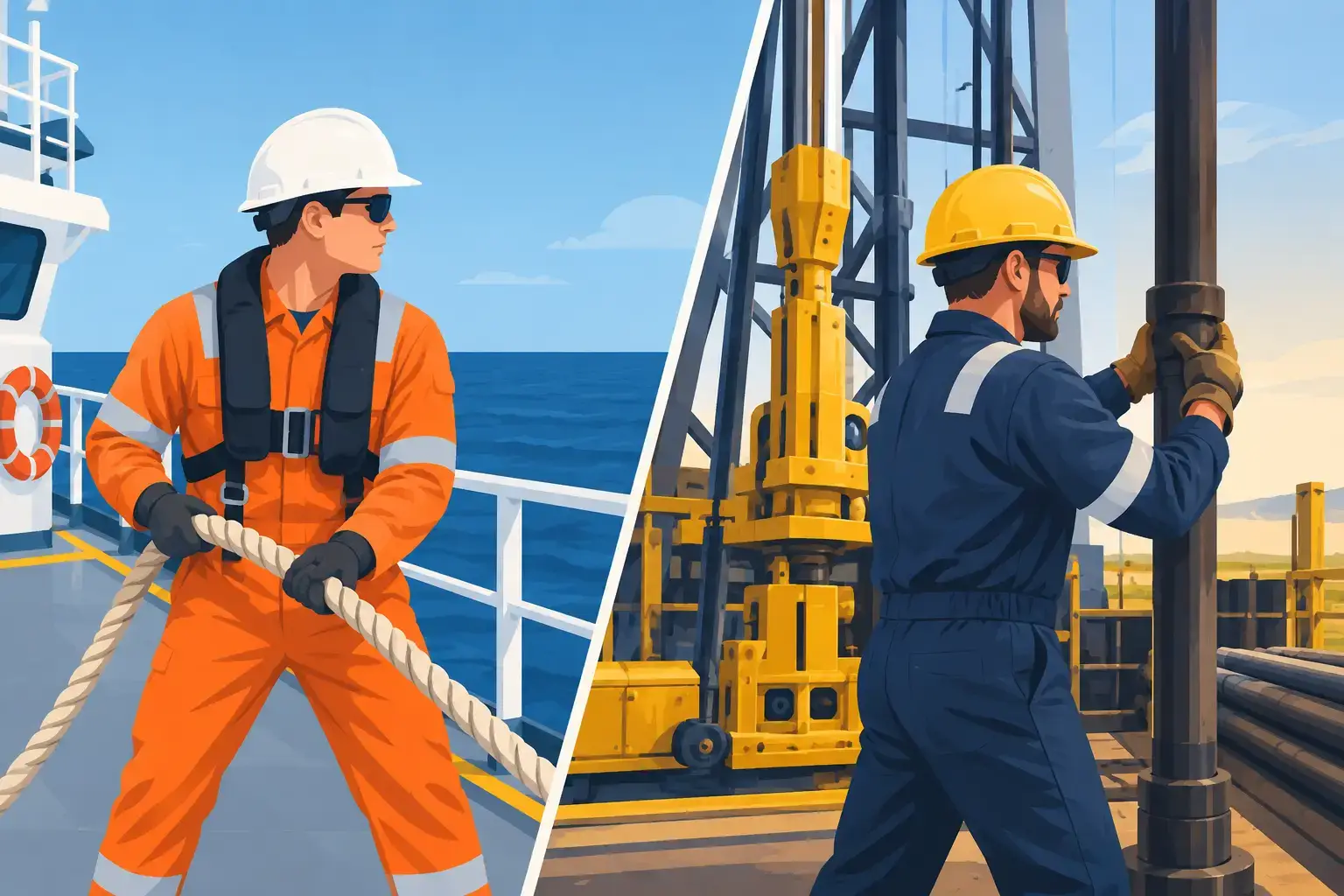
A deck crew versus roustabout comparison matters because the job title you target affects your CV, certifications, employer list, and first steps into offshore work. Both roles can put you on a rotational schedule and create a path toward better earnings, but they are not interchangeable. One is usually tied to vessel operations; the other is commonly tied to oil and gas platform or rig work.
If you are new to offshore, do not get stuck trying to find the “easier” job. Focus on the role that matches your experience, physical capability, location, and the type of offshore employer you can realistically apply to now.
Deck Crew Versus Roustabout: The Core Difference
A deck crew member works aboard a vessel. That could be a supply vessel, tug, construction vessel, crew boat, research vessel, dive support vessel, or another offshore support ship. The work centers on deck operations, cargo, mooring, vessel upkeep, safety routines, and supporting marine activities.
A roustabout usually works on an offshore drilling rig, production platform, or fixed installation. The role is general labor with a strong focus on keeping the facility clean, organized, supplied, and ready for operations. Roustabouts support experienced crews, move equipment and materials, handle basic maintenance, and follow the direction of supervisors such as the crane operator, deck foreman, or toolpusher.
The overlap is real. Both jobs are physically demanding, safety-critical, and entry-level in many organizations. Both require you to work well in a team, follow instructions precisely, maintain situational awareness, and accept that weather, shift patterns, and operational priorities can change the plan quickly.
The difference is the workplace. Deck crew work is marine-based and vessel-focused. Roustabout work is oilfield-based and installation-focused.
What a Deck Crew Member Actually Does
Deck crew responsibilities vary by vessel and job title. A new hire may come in as an ordinary seaman, deckhand, or trainee, while experienced workers may hold an able seaman credential or a specialized marine position.
On a typical offshore support vessel, deck crew may assist with loading and securing cargo, handling mooring lines, cleaning and maintaining deck areas, painting and corrosion control, checking safety equipment, and supporting crane or cargo operations. On some vessels, the crew handles hoses, containers, pipe, drilling supplies, fuel transfers, and deck cargo headed to offshore facilities.
This is not simply “cleaning the boat.” A capable deckhand needs to understand line-handling hazards, exclusion zones, lifting operations, slips and trips, man-overboard procedures, and the chain of command aboard a vessel. Poor attention can injure people, damage equipment, or interrupt a costly operation.
For applicants with maritime experience, fishing, towing, warehousing, rigging, construction, or logistics backgrounds, deck crew can be a strong fit. Employers often value candidates who already understand physical work, equipment discipline, weather exposure, and shift-based operations.
Deck crew hiring requirements
The exact requirements depend on the country, flag state, vessel type, and employer. In the US market, employers may look for a Transportation Worker Identification Credential, basic safety training, medical fitness documentation, drug screening clearance, and maritime credentials appropriate to the role. Some positions require an MMC or specific STCW endorsements.
Do not assume every deckhand job requires the same certificate package. Read the vacancy carefully. A company operating Jones Act vessels in the Gulf of Mexico may have very different hiring standards from an international offshore contractor.
What a Roustabout Actually Does
A roustabout is often one of the first hands-on roles available on a drilling or production facility. The job supports the daily running of the rig or platform. That can include housekeeping, painting, pressure washing, moving materials, organizing storage areas, loading and unloading supplies, assisting with slings and lifting tasks, and basic equipment care.
On a drilling rig, roustabouts may work around pipe-handling areas, cranes, tubulars, containers, drilling supplies, and waste-management tasks. On production facilities, the role may support maintenance teams, logistics operations, or general facility upkeep. The specific work depends on whether the installation is drilling, production, accommodation, or construction focused.
A roustabout is expected to do basic tasks correctly before being trusted with more responsibility. That means using the right PPE, understanding permits and toolbox talks, identifying hazards, keeping work areas clear, and stopping work when conditions are unsafe.
This role can be a practical entry point for people coming from construction, industrial cleaning, farming, trucking, warehouses, mechanical labor, or general oilfield work. You do not need to arrive as an expert. You do need to show that you are reliable, teachable, physically prepared, and serious about safety.
Roustabout hiring requirements
Offshore oil and gas employers commonly require an offshore survival course, medical clearance, drug and alcohol testing, and site-specific safety training. Depending on the region and company, you may see requirements such as BOSIET, HUET, offshore medical certificates, H2S awareness, or basic fire and first aid training.
Certifications matter, but they do not replace a strong application. A candidate with every course listed but a generic CV can still be passed over. Hiring teams want clear evidence that you understand the role, can work rotationally, meet the physical requirements, and have transferable experience relevant to a safety-sensitive environment.
Pay, Rotations, and Career Progression
Neither title comes with one standard salary. Pay changes based on location, employer, union status, vessel or rig type, experience level, overtime, and whether travel is covered. Offshore work can offer higher earning potential than comparable onshore labor because of the schedule, conditions, and safety responsibility, but do not choose a job based on internet salary claims alone.
Deck crew members may work schedules such as 14 days on and 14 days off, 28 days on and 28 days off, or longer hitches on international vessels. Roustabouts often work 14/14, 14/21, 21/21, or 28/28 rotations, depending on the operator and region. A rotation can create meaningful time off, but the time on board is demanding. Twelve-hour shifts are common, and your workday does not end because the weather is bad or the task is inconvenient.
Career progression is also different. A deckhand may move toward able seaman, bosun, crane operations, vessel operations, or other maritime roles after gaining sea time and credentials. A roustabout may progress toward floorhand, derrickhand, assistant driller, maintenance support, crane operations, or specialized production and mechanical positions.
Your best route depends on where you want to be in three to five years. If you want a maritime career with documented sea service and vessel credentials, deck crew is often the better foundation. If you want to build a career around drilling, production, or offshore oilfield operations, a roustabout role may put you closer to that path.
Which Role Should You Target First?
Target deck crew roles when you are comfortable with vessel life and have maritime, cargo, line-handling, rigging, or marine-adjacent experience. Also prioritize them if you are prepared to pursue the credentials required for the vessels operating in your target market.
Target roustabout jobs when your experience is closer to construction, industrial labor, maintenance, lifting, warehousing, or oilfield support. You will still need offshore safety credentials, but your CV should emphasize practical reliability: following procedures, using tools safely, handling materials, working long shifts, and contributing to a crew.
Apply to both only when you can tailor your application properly. Sending the same CV to a vessel operator and a drilling contractor makes you look unprepared. The job titles may be entry-level, but employers still expect you to understand what their operation does.
How to Make Your Application Competitive
Start by building a role-specific CV. For deck crew applications, highlight marine exposure, cargo handling, lifting and rigging, maintenance, safety inspections, and any relevant credentials. For roustabout applications, emphasize industrial labor, equipment handling, housekeeping standards, construction tasks, mechanical aptitude, and safety participation.
Use clear language. Replace vague statements like “hard worker” with proof: completed daily equipment checks, handled heavy materials safely, worked 12-hour shifts, followed lockout procedures, maintained organized work areas, or supported lifting operations under supervision.
Then verify your certification plan before spending money. The right certificates are based on the employers and geographic markets you are targeting, not a random checklist from social media. RouteK helps candidates organize this process around real job requirements, stronger applications, and companies that hire offshore workers.
Your first offshore job does not need to define your entire career. It needs to get you into a safety-driven operation where you can build a track record, learn fast, and earn the next opportunity through performance.
Leave a Reply