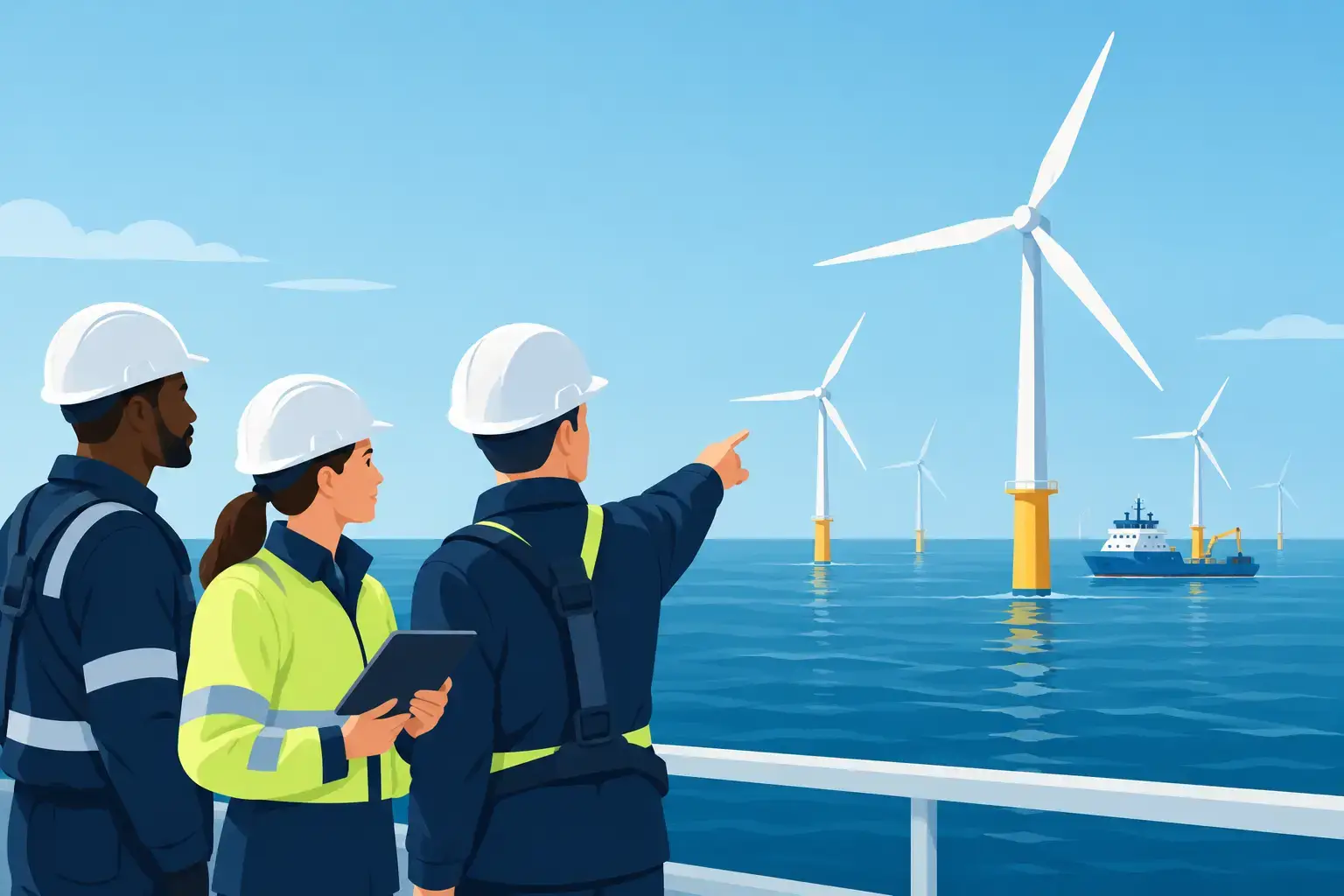
A wind farm at sea is not built by a single type of worker. It takes vessel crews, riggers, mechanics, electricians, technicians, logistics teams, safety professionals, survey support, and experienced supervisors working to tight weather windows. That is why offshore wind growth matters to anyone looking for a higher-paying, rotational career path – especially workers who already bring hands-on experience from construction, maritime, industrial, energy, or mechanical fields.
The opportunity is real, but so is the competition. Offshore wind employers do not hire based on enthusiasm alone. They need people who can follow procedures, work safely around heavy lifts and moving vessels, communicate clearly, and show up with the right documents. If you want to move into this sector, your goal is not just to find a job posting. It is to become easy for an employer to hire.
Why Offshore Wind Growth Changes the Hiring Picture
Offshore wind projects create work in stages, and each stage needs different people. Before turbines generate power, developers need survey work, port activity, fabrication, vessel mobilization, cable installation, foundation installation, and turbine commissioning. Once a project is operating, the focus shifts toward inspection, maintenance, repair, marine coordination, and long-term asset management.
That means the best entry point depends on what you already know how to do. A construction worker may be a stronger fit for installation support, lifting operations, or fabrication-related work. A marine worker may be suited to vessel operations, deck support, or crew transfer activity. An electrician, hydraulic technician, or mechanically minded worker may have a more direct route into turbine maintenance after completing the required training.
Not every role is a wind turbine technician role. This is one of the biggest mistakes new candidates make. They see offshore wind growth, search for technician jobs only, and overlook the contractors and support companies that keep the project moving. Ports, vessels, cable contractors, inspection companies, logistics providers, and marine service businesses can all offer valuable first offshore experience.
The Jobs Behind an Offshore Wind Project
Construction-phase hiring can be intense, but it is often project-based. Jobs may be tied to a specific campaign, vessel, or location. They can offer strong earning potential and exposure to offshore work, but schedules and contract lengths may change when weather, permits, equipment availability, or project timelines shift.
Operations and maintenance roles are usually more stable because wind farms require support for years after installation. These positions can be highly competitive, particularly technician roles. Employers commonly look for electrical, mechanical, hydraulic, troubleshooting, or rope-access experience, along with a proven safety record.
For candidates without direct wind experience, entry-level or adjacent roles can include deckhand support, rigger, slinger/signaler, general labor, warehouse and port operations, vessel catering, logistics coordination, marine maintenance, and project support. The exact title varies by employer and country, so do not rely on one job title during your search. Search by skills, project stage, vessel type, and employer category.
Construction work versus long-term operations
There is no single “best” side of offshore wind. Construction can be a fast way to get exposure, build contacts, and gain offshore hours. It may also involve travel, temporary contracts, and demanding mobilization schedules. Operations and maintenance can provide a clearer long-term career ladder, but the technical bar is often higher.
A smart strategy is to pursue the role that gets you safely into the industry while continuing to build toward the work you want. Someone who starts in marine logistics, for example, may later move toward vessel coordination or offshore operations. A rigger with a strong safety record may gain access to more specialized lifting work. Your first offshore role does not have to define your entire career.
What Employers Need Before They Can Put You Offshore
Offshore hiring is safety-critical. Employers must know that you are medically fit, trained for the role, eligible to work where the project is located, and capable of operating within strict safety systems. A good attitude helps, but it cannot replace documentation.
The certifications you need depend on the employer, role, region, and project. For wind-specific roles, Global Wind Organisation training is commonly requested. Basic Safety Training may cover areas such as working at height, first aid, fire awareness, manual handling, and sea survival. Some roles also require technical modules, rescue training, or other specialist credentials.
Marine and vessel-based positions may have different requirements, including maritime safety training, credentials for seafarers, security training, or licenses relevant to the vessel and job function. Rope-access, lifting, electrical, welding, NDT, and confined-space roles can require their own recognized qualifications.
Do not spend money blindly. Read job descriptions from the companies you want to work for, then identify the certifications that appear repeatedly. Some employers will train strong candidates for certain requirements, while others expect applicants to arrive fully qualified. The right question is not, “What certificate gets me offshore?” It is, “What does this specific job require, and which qualification gives me the strongest return?”
You also need to prepare for medical screening, drug and alcohol policies, background checks where applicable, passport requirements, and travel readiness. If you are applying for rotational work, be honest with yourself about the lifestyle. Time away from home, early calls, weather delays, shared accommodations, and physically demanding shifts are part of the job for many offshore workers.
Turn Your Existing Experience Into an Offshore-Ready CV
A generic resume can make a qualified worker look inexperienced. Offshore employers need evidence, not broad statements like “hard worker” or “team player.” Your CV should translate what you have done into the language of safety, equipment, procedures, and responsibility.
If you worked in construction, describe the tools and equipment you used, your experience around lifts, your understanding of permits, and any safety systems you followed. If you worked in logistics, show that you can manage inventory, coordinate time-sensitive movements, operate equipment, and maintain accurate records. If you have mechanical experience, name the systems you maintained, the faults you diagnosed, and the preventive maintenance tasks you completed.
Use numbers where they strengthen the story. Mention crew size, equipment type, project scale, shift patterns, certifications, incident-free performance, or the level of responsibility you held. Keep claims accurate. In offshore work, an inflated CV can end a hiring process quickly because references, documents, and competency questions are closely checked.
Your opening profile should make your target clear. State the role or offshore pathway you are pursuing, the relevant transferable experience you bring, and the certifications or training you hold. Then make it simple for a recruiter to find your contact details, location, work authorization, passport status if relevant, and availability for rotation.
Apply Beyond the Major Wind Developers
Large wind developers are visible, but they are not the only employers that matter. Much of the work is delivered through contractors and subcontractors. A project can involve marine contractors, turbine manufacturers, vessel operators, cable companies, port service providers, inspection firms, staffing agencies, and specialist maintenance businesses.
This is where many applicants lose time. They apply to a handful of famous companies, receive no response, and assume there are no opportunities. A stronger approach is to build a targeted employer list by category and apply consistently. Track who you applied to, the role, the required documents, the contact date, and the follow-up action. Treat your search like a work campaign, not a lottery ticket.
Be open to travel if your circumstances allow it. Offshore wind activity is regional, and jobs may be concentrated around certain ports or project areas. At the same time, do not claim availability you cannot support. Employers value candidates who are realistic about mobilization, travel documents, and rotation commitments.
RouteK’s approach is built around this practical reality: organize your qualifications, identify the employers that actually fit your background, and submit applications that show you understand offshore standards.
Build the Habits That Get You Hired Again
Your first offshore job can open doors, but only if you protect your reputation. The workers who keep getting called back are not always the loudest or most experienced. They are often the people who arrive prepared, respect the chain of command, complete paperwork properly, use stop-work authority when something is unsafe, and work well in close quarters.
Offshore wind growth will create demand, but demand does not remove standards. In many cases, it raises them. As projects become larger and more complex, employers need people who can work reliably across different contractors, equipment systems, and safety cultures.
Start preparing before the perfect job appears. Build the right documents, identify the most relevant training, sharpen your CV, and target employers connected to the work you can realistically perform. The strongest career move is not waiting for offshore wind to become easier to enter. It is becoming the candidate a project team can trust when the next hiring window opens.
Leave a Reply