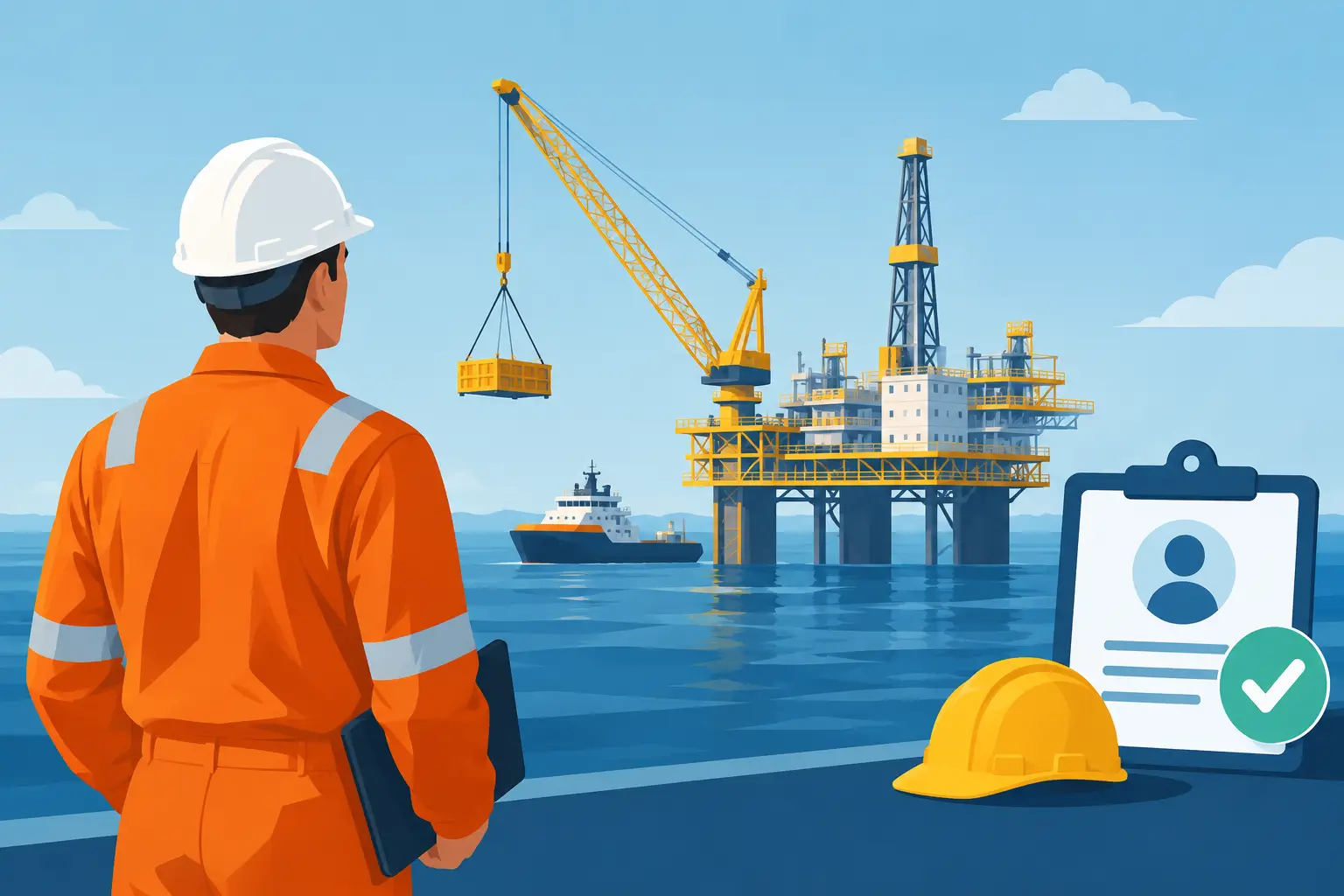
A crane lift offshore is never just a crane lift. It is a planned operation involving weather, load weight, radio communication, deck conditions, exclusion zones, and people who know exactly where to stand. That is why offshore crane careers can offer serious earning potential and rotational time off, but they also demand a safety-first mindset long before you step onto a platform, vessel, or wind installation.
For people coming from construction, logistics, maritime work, mechanical trades, or industrial labor, cranes can be a credible route into offshore work. The key is understanding that “offshore crane jobs” covers several different positions. You may start by supporting lifting operations, not sitting in the operator’s cab on day one. That is not a setback. It is how many workers build the experience, references, and operational judgment employers trust.
What offshore crane careers actually include
The most visible role is the offshore crane operator. Operators move supplies, equipment, containers, pipes, and personnel baskets where permitted under company procedures. They work from fixed platforms, drillships, floating production units, construction vessels, and offshore wind vessels. Precision matters because a suspended load can shift with vessel motion, wind, or sea conditions.
But lifting operations rely on a full team. Riggers prepare loads, select and inspect slings and lifting gear, connect loads correctly, and work under the lift plan. Banksmen or signalers guide the operator using radio and hand signals. Deck crew and material handlers help organize cargo, manage backload, and maintain safe work areas. Lifting supervisors coordinate the operation, verify controls, and stop the job when conditions change.
For a newcomer, rigger, deck crew, roustabout, or material-handling work may be the more realistic entry point. These jobs put you close to crane operations and build the practical experience needed for bigger lifting responsibilities. Direct-entry crane operator openings do exist, especially for candidates with significant land-based crane experience, but offshore employers usually want proof that you can work safely in a high-consequence environment.
Why the work pays more
Offshore compensation reflects more than technical ability. You are working away from home, often on a two-weeks-on, two-weeks-off schedule or another rotational pattern. You must follow strict safety systems, pass medical requirements, live and work in a confined environment, and remain focused through long shifts.
Pay varies widely by location, employer, union coverage, vessel type, experience, overtime rules, and the exact role. A certified, experienced crane operator on a specialized project can earn far more than an entry-level deck worker. At the same time, a higher day rate is not the only number to examine. Ask whether travel is paid, whether the rotation is guaranteed, how overtime is handled, and whether the contract is project-based or ongoing.
Offshore wind, oil and gas, decommissioning, subsea construction, and marine logistics all use lifting teams. The strongest market for you depends on where you can legally work, your travel flexibility, and which credentials employers in that region recognize.
The credentials employers expect
There is no single certificate that guarantees an offshore crane job. Requirements differ by country, client, asset, and job title. However, employers consistently look for evidence that you understand offshore safety and lifting discipline.
For US-based work, a Transportation Worker Identification Credential may be relevant for port and maritime access. A valid passport is often essential, even if you plan to start domestically, because projects and crews can move internationally. Offshore medical clearance and drug and alcohol screening are standard expectations.
Safety training may include offshore survival and emergency response courses, such as BOSIET or HUET equivalents, depending on the region and employer. Rigging, signaling, and lifting certifications can strengthen an application when they are recognized by the hiring company. If you are pursuing operator work, employers may also ask for crane-specific qualifications, logged operating hours, assessments, and certifications accepted in their operating area.
Do not collect certifications blindly. A common mistake is spending thousands of dollars on courses before identifying the roles and employers you can realistically target. Start with the baseline credentials repeatedly requested in job postings for your location, then build from there. A well-chosen training plan beats a stack of unrelated certificates.
Experience still matters, but it can be built
If you have construction crane, forklift, telehandler, warehouse, dock, heavy-equipment, trucking, or mechanical experience, do not bury it in a generic resume. Translate it into the language offshore hiring managers understand: equipment inspections, load control, radio communication, permits, hazard recognition, teamwork, maintenance reporting, and adherence to procedures.
If you have no related experience, aim for roles where reliability and safety awareness can get you through the door. Port labor, industrial rigging, marine services, construction support, warehousing, and entry-level deck work can all provide useful exposure. Your first position may not carry the offshore crane operator title. It can still be a strategic move toward it.
How to make your application offshore-ready
A standard resume designed for a retail or office job will not compete well here. Offshore recruiters review applications quickly, often against specific client requirements. Your CV needs to show whether you are deployable, qualified, and capable of working safely with a crew.
Put your relevant certifications, medical status if appropriate, passport or work authorization, equipment experience, and safety training where they can be found immediately. Use clear job titles and dates. Describe what you operated, what lifting or material-handling tasks you performed, and the scale of the work when you can support it with facts.
For example, “worked on construction sites” says very little. “Performed daily pre-use inspections, directed material movements by radio, and maintained exclusion zones during lifting activity” gives an employer evidence of transferable skill. Never exaggerate crane seat time, offshore experience, or certifications. In lifting operations, a false claim can end an interview quickly and create a safety risk later.
Your application should also be targeted. A rigger opening, a deck crew position, and a crane operator vacancy may sit within the same company, but they require different emphasis. Match your CV summary and experience bullets to the job you are applying for rather than sending one unchanged document everywhere.
A practical route into offshore lifting work
Start by choosing a realistic first target. Candidates with documented crane experience can pursue assistant operator, operator trainee, or offshore operator roles where available. Candidates with hands-on industrial backgrounds may be better positioned for rigger, banksman, deck crew, or material-handling jobs. Those without industry experience should focus on foundational safety training, a strong work record, and employers that hire for entry-level offshore support roles.
Next, build an employer list instead of relying only on major job boards. Offshore hiring is fragmented. Staffing agencies, vessel operators, marine contractors, drilling contractors, wind-service companies, port operators, and construction contractors may all hire lifting personnel. Track the companies, the locations they serve, their stated requirements, and the roles that appear repeatedly.
Then prepare before jobs open. Keep digital copies of certificates, IDs, training records, references, and your current CV organized. Hiring can move quickly when a crew change or project mobilization creates demand. Being able to respond with complete, accurate documents is a competitive advantage.
Finally, keep building evidence. Every safely completed rigging task, inspection, equipment course, and supervisor reference strengthens your position. RouteK helps candidates organize that process into a clear employment plan, from identifying the right certifications to creating a CV that presents their experience properly.
The mindset that keeps people progressing
Offshore lifting is not a shortcut career. It rewards workers who are coachable, calm under pressure, precise with procedures, and willing to start at the level their experience supports. The people who advance are not always the ones with the most impressive job title. They are the ones known for showing up prepared, communicating clearly, respecting the chain of command, and stopping work when something is unsafe.
If your goal is a higher-paying rotational career, crane work can be a strong direction. Treat the first offshore role as the beginning of a documented progression, not the final destination. Build the right credentials, apply with evidence, and make every job move bring you closer to the cab, the deck, or the lifting team you want to join.
Leave a Reply