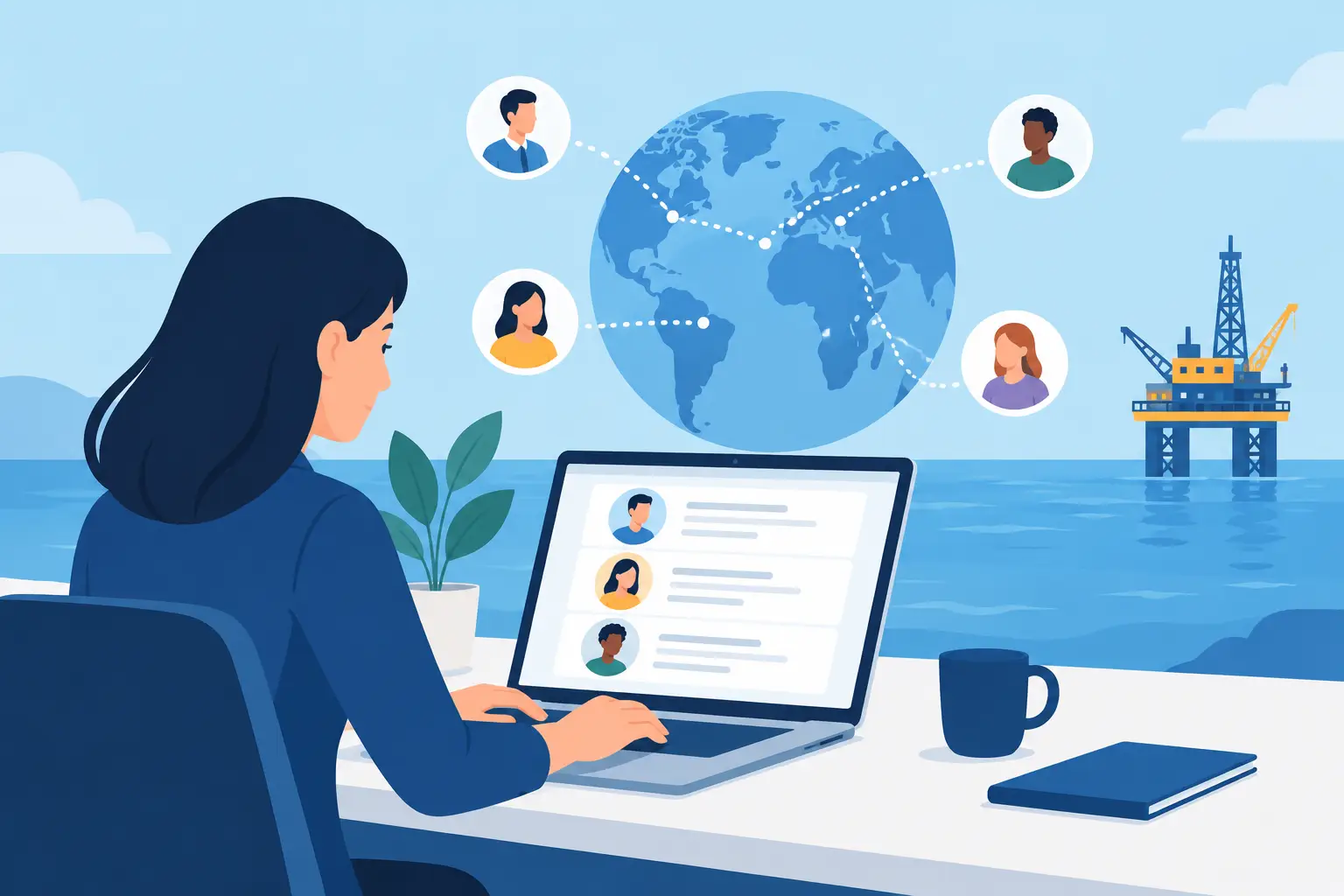
A modern offshore platform can monitor equipment from a control room, send real-time data to shore, and use remotely operated vehicles to inspect subsea equipment hundreds of feet below the water. That does not mean offshore technology has removed the need for people. It has changed the kind of people employers need – workers who can follow procedures, use digital tools, communicate clearly, and make safe decisions when conditions are demanding.
For someone trying to break into offshore work, this matters. You do not need to become an engineer before applying for an entry-level role. But you do need to understand how technology affects the jobs, the safety culture, and the standards employers use when they choose candidates.
What Offshore Technology Means on the Job
Offshore technology is the equipment, systems, and software used to explore for energy, produce it, maintain offshore assets, move materials, and protect people and the environment. It includes major systems such as drilling equipment, cranes, power generation, dynamic positioning, process controls, communications networks, and subsea inspection tools.
It also includes the everyday technology workers use during a hitch. Digital maintenance systems track work orders. Permit-to-work systems control hazardous tasks. Electronic checklists document inspections. Radios, alarms, gas detection equipment, and emergency systems support safe operations. On many vessels and facilities, crews rely on computerized control systems that require disciplined communication between the field and the control room.
The point for a new candidate is simple: offshore employers are not only hiring physical labor. They are hiring people who can work within a tightly controlled operating system. Showing that you understand this makes your application stronger than one that says only, “hard worker seeking an offshore opportunity.”
Technology Is Raising the Standard, Not Closing the Door
Automation gets a lot of attention in the energy and maritime sectors. Some tasks that once required large crews can now be handled with sensors, remote monitoring, automated pipe handling, and specialized inspection equipment. Certain job titles will shrink, while technical and maintenance-focused roles will grow.
But offshore operations still depend on crews. Equipment needs to be inspected, repaired, cleaned, tested, supplied, and operated. Cargo must move safely. Emergency procedures need trained people. A sensor can detect a problem, but someone still has to respond correctly, isolate the equipment when required, report the issue, and complete the job to standard.
Technology can make entry harder if a candidate has no safety training, no awareness of procedures, and no proof they can learn. It can also create an advantage for newcomers who come prepared. A construction worker who understands lockout/tagout, a mechanic who can read maintenance instructions, or a logistics worker who follows documentation requirements already has experience that transfers.
Employers do not expect every roustabout, deckhand, rigger, or steward to troubleshoot an advanced control system. They do expect everyone offshore to respect the systems around them. That means stopping work when something is wrong, asking questions instead of guessing, and documenting work accurately.
Where New Candidates Can Fit In
The best entry route depends on your location, work history, certifications, and the offshore sector you target. Oil and gas installations, offshore wind projects, drillships, supply vessels, construction vessels, and maritime support operations all use technology differently. Their hiring requirements are not identical.
In oil and gas, entry-level candidates may target roles such as roustabout, deck crew, galley hand, utility worker, warehouse support, or material handling positions. On vessels, deckhand and able seaman pathways may require maritime credentials and sea-time requirements. Offshore wind can offer openings in logistics, marine support, rope access, maintenance support, and technician pathways, but many roles require specific training and may favor electrical or mechanical experience.
The common thread is operational discipline. An employer wants to know whether you can arrive fit for duty, work a rotation, use required PPE, follow a chain of command, and learn the site’s technology without creating risk.
Your background can help you make that case. If you have used handheld scanners, maintenance software, forklifts, lifting equipment, industrial tools, work permits, or safety reporting systems, do not bury that experience in a generic resume. Describe it in practical terms. State what you operated, what procedures you followed, and how you contributed to safe, reliable work.
Digital Confidence Is a Real Employability Skill
You do not need advanced coding skills to work offshore. You do need to be comfortable learning job-related systems. Basic computer ability, accurate data entry, reading digital work instructions, using email professionally, and completing online training are now part of employability in many offshore roles.
This is especially relevant during hiring. Applications are often submitted through company portals, not handed directly to a supervisor. A poorly completed profile, missing certificate, or generic CV can remove you from consideration before a recruiter sees your work ethic.
Treat the application process as your first safety-critical task. Read the requirements. Upload documents in the correct format. Use job titles and keywords that match your actual experience. Do not claim credentials you do not have. Offshore employers verify qualifications, and honesty matters as much as experience.
How Offshore Technology Changes Your Job Search
A smarter job search starts with matching your target role to the technology and operating environment involved. If you want to work on a drilling rig, learn the difference between drilling operations, marine operations, maintenance, and catering support. If you are targeting offshore wind, understand the difference between turbine technician work, vessel crew roles, and port-based logistics.
Then build your preparation around what employers can assess. For most newcomers, that includes four areas:
- Required safety and survival training for the region and role you want
- A CV that translates your previous work into offshore-relevant skills
- Evidence that you can work safely, communicate clearly, and follow procedures
- A focused list of employers and roles instead of random applications
Certifications matter, but they are not a magic ticket. The right training can prove baseline readiness, while the wrong certificate can cost money without improving your chances. Requirements vary by country, client, vessel type, and position. Before paying for training, check actual job postings and identify what the employers you want consistently request.
The same rule applies to technical training. A short course can show initiative, but it cannot replace verified experience in electrical work, mechanics, welding, lifting operations, or maritime service. If you are changing careers, look for the closest match between what you have done and what the role requires. A maintenance worker may be better positioned for mechanical support than for an unrelated technician title. A warehouse operator may have a strong case for materials or logistics work.
Build a CV That Reflects the Real Work
Offshore hiring managers scan for evidence, not motivational language. They want to see reliability, safety awareness, equipment experience, physical readiness, certifications, and relevant work history. A strong CV makes that information easy to find.
Replace vague statements such as “team player with a positive attitude” with specific proof. You might state that you completed daily equipment inspections, followed confined-space procedures, loaded and secured materials, worked 12-hour shifts, or reported hazards through a formal process. Those details show a recruiter how you will behave offshore.
If you have no direct offshore experience, do not apologize for it throughout the document. Lead with transferable experience and readiness. Include your certifications, location, work authorization where relevant, availability for rotational work, and any industrial, maritime, construction, mechanical, or logistics background.
RouteK’s approach is built around this practical shift: stop treating offshore work as a mystery and start treating it as a hiring system you can prepare for. The right CV, targeted applications, employer research, and certification plan give you a more credible starting point than sending the same resume to every company you can find.
The Habit That Employers Notice
Technology changes quickly. The hiring advantage that lasts is not knowing every system before your first hitch. It is showing that you learn carefully, work safely, and take responsibility for the details.
Read job descriptions closely. Keep your documents current. Build skills that match the work you want rather than chasing every certificate available. When you finally speak with a recruiter or supervisor, be ready to explain how your past experience proves you can contribute in a safety-critical environment.
Offshore careers can offer higher earnings, rotational schedules, and a real path forward, but employers will expect you to arrive prepared. Make your preparation visible, and let your job search show the same discipline the offshore workplace demands.
Leave a Reply