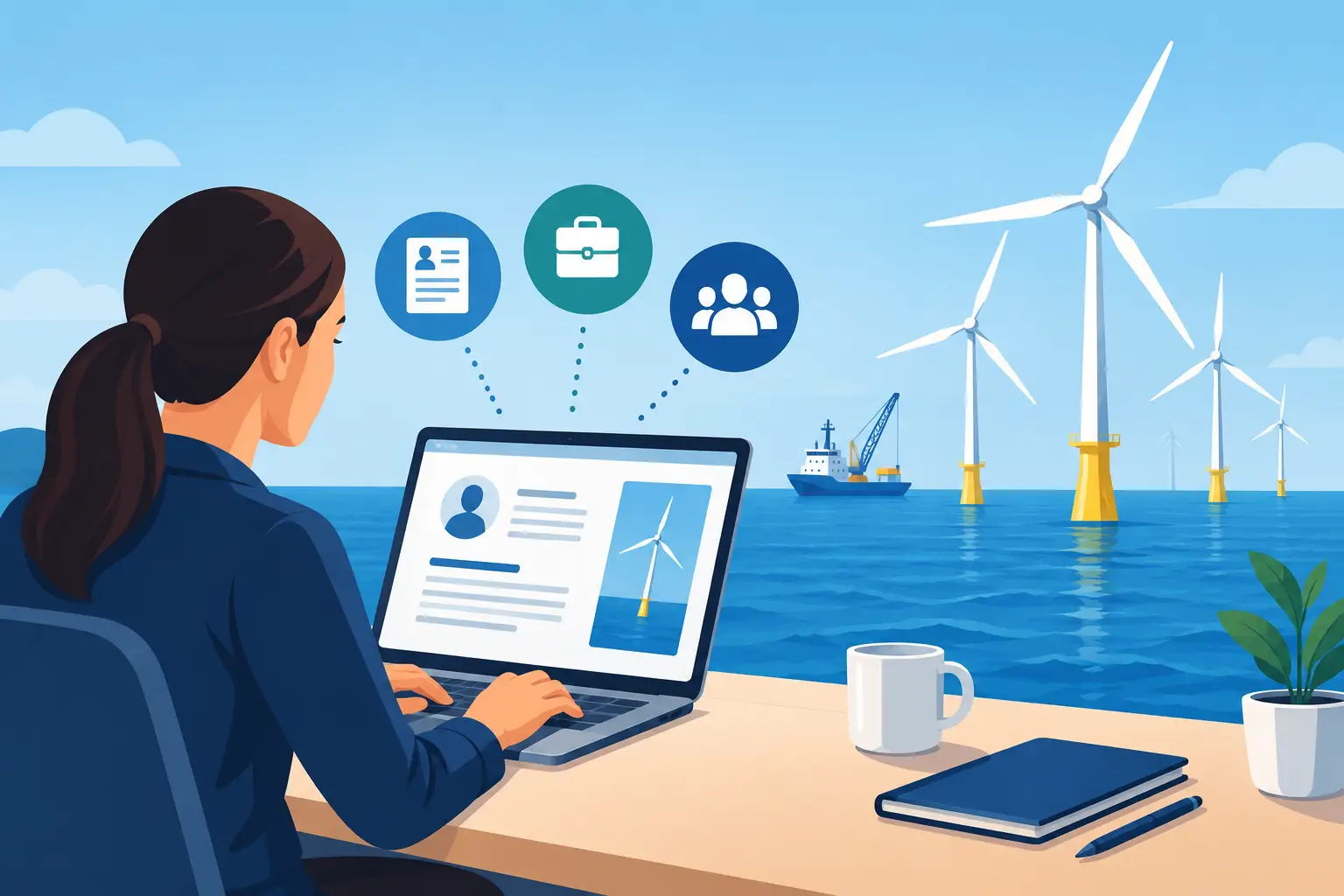
A wind farm can be miles from shore, but the hiring decision often starts with a document on a recruiter’s screen. If you have searched “how to apply offshore wind,” what you likely need is a practical route to applying for offshore wind jobs – not vague advice or a list of job boards.
Offshore wind is growing, but it is not a shortcut around hiring standards. Employers need people who can work safely, follow procedures, live or travel on rotation, and contribute to a crew in demanding conditions. You do not always need previous offshore experience to get started. You do need to show that you understand the job, meet the entry requirements, and can bring useful experience from construction, mechanical work, logistics, maritime, electrical work, or another hands-on field.
How to Apply for Offshore Wind Jobs: Start With the Role
Do not apply to every job with “offshore” in the title. Offshore wind has several routes in, and the qualifications vary significantly between them.
A wind turbine technician may work on mechanical, electrical, hydraulic, or blade systems. An offshore construction role may involve lifting operations, cable installation, foundations, marine coordination, or deck work. Vessel-based positions can include deck crew, marine operations, catering, and logistics. There are also onshore support roles in warehouses, ports, control rooms, and project administration that can create a path toward offshore work.
Read job descriptions closely and look for the repeated requirements. If multiple technician jobs ask for electrical fault-finding, mechanical maintenance, and Global Wind Organisation training, that is your signal. If vessel roles consistently require maritime credentials or prior sea time, do not assume a general construction background will replace those requirements.
Your best entry point depends on what you already bring. An electrician or maintenance mechanic may be closer to a technician role. A rigger, crane operator, or construction worker may fit offshore installation and marine construction work. Someone without a trade can still target trainee, labor support, logistics, warehouse, catering, and entry-level vessel opportunities, but should expect competition and build a stronger safety profile first.
Build the Certifications Employers Actually Recognize
Certifications help employers see that you can enter a safety-critical workplace without starting from zero. They are not a guaranteed job offer, and paying for every course you find is an expensive mistake. Build toward the role and region you want.
For many offshore wind positions, Global Wind Organisation Basic Safety Training is a recognized starting point. Its modules commonly cover first aid, fire awareness, manual handling, working at heights, and sea survival. Depending on the role, employers may also request GWO Basic Technical Training, advanced rescue training, medical fitness clearance, or specific electrical and mechanical qualifications.
In the US, requirements can also depend on the project, vessel operator, port, and employer. OSHA training, a Transportation Worker Identification Credential, drug and alcohol testing, a valid passport, and the legal right to work may matter. For marine roles, STCW or other maritime credentials may be essential. Never book training based only on a social media post. Pull requirements from current job ads in your target market, then confirm them with the training provider and the employer when possible.
There is a trade-off here. Getting core safety training can make you more application-ready, but certifications alone do not prove you can troubleshoot equipment, follow a permit-to-work system, or perform reliably in a team. Pair them with relevant practical experience and a focused job search.
Create an Offshore-Ready CV, Not a General Resume
A recruiter should be able to identify your relevant experience within the first few seconds. A generic resume that says you are “hardworking” will not compete against someone who shows maintenance tasks, safety responsibilities, equipment used, and measurable results.
Start with a short professional profile that states your target role, core trade or operational background, relevant certifications, and availability for rotational work. Then turn previous jobs into evidence. A construction worker might highlight daily toolbox talks, lifting operations, work at height, confined-space awareness, power-tool use, and compliance with site safety procedures. A mechanic could show preventative maintenance, hydraulic repairs, fault diagnosis, inspections, and breakdown response.
Use clear language that a hiring manager can scan. Name the equipment, systems, permits, and safety practices you have worked with. Include certifications with completion dates and expiration dates where relevant. If you have a driving license, passport, security credential, or ability to travel internationally, place that information where it is easy to find.
Do not pretend that land-based work is offshore experience. Instead, make the connection honestly: “Five years of industrial maintenance in high-risk environments” is valuable when supported by specific responsibilities. Offshore employers respect candidates who understand the gap and are actively closing it.
Prepare Your Documents Before You See the Right Vacancy
Many candidates lose time because they start gathering documents after a recruiter calls. Have your CV in a clean PDF format, copies of certificates, proof of work authorization, identification, passport details, references, and any medical documentation the employer has requested.
Keep a simple application tracker with the company name, role, date applied, contact person, documents sent, and follow-up date. Offshore hiring can move quickly around mobilization schedules. If a project needs people to mobilize within weeks, being organized can separate you from equally qualified applicants.
Your references matter too. Choose supervisors, foremen, managers, or senior colleagues who can speak about your safety attitude, reliability, attendance, technical ability, and teamwork. Ask permission before listing them. A reference who is surprised by a call is not helping your application.
Target Employers and Recruitment Agencies With Purpose
The offshore wind sector includes turbine manufacturers, developers, engineering contractors, marine contractors, vessel operators, operations and maintenance providers, and staffing agencies. They do not all hire for the same jobs, or at the same stage of a project.
A company building foundations may need marine construction workers and lifting support. A company operating an established wind farm may prioritize technicians with maintenance and troubleshooting skills. A recruitment agency may be filling short-term rotation work, while a manufacturer may offer a more structured technician pathway.
Apply directly where possible, but do not ignore specialist recruiters. When you speak with one, be precise about your location, work authorization, certifications, trade background, willingness to travel, and target role. “I will do anything offshore” sounds unfocused. “I am a mechanical maintenance worker with working-at-heights training, available for rotation and targeting wind turbine technician assistant roles” gives them something they can place.
RouteK’s approach is built around this kind of focused preparation: understanding employer requirements, presenting your experience properly, and applying with a system instead of sending the same resume everywhere.
Make Each Application Easy to Say Yes To
Tailor your CV and short application message to the specific vacancy. Mirror the job description’s real language when it accurately reflects your experience. If the job requires preventative maintenance, say where you have done preventative maintenance. If it requires a strong safety culture, mention your participation in toolbox talks, permit systems, inspections, or incident prevention.
Use the application form to answer availability questions directly. State whether you can travel, whether you hold a passport, and whether you need sponsorship if the question is asked. Avoid vague claims and long personal stories. The goal is to reduce uncertainty for the person deciding who gets an interview.
If you lack one requirement, do not hide it. Explain what you have, what you are currently completing, and how your transferable experience applies. An employer may reject a missing mandatory credential, but an honest candidate with a clear plan has a better chance than one who overstates qualifications.
Be Ready for the Safety and Motivation Questions
Interviews for offshore wind jobs often test more than technical knowledge. Employers want to know whether you can follow instructions, communicate under pressure, manage fatigue, and work respectfully in a close-knit team.
Prepare examples from your previous work. Be ready to describe a time you stopped unsafe work, followed a procedure under pressure, solved a mechanical problem, worked long shifts, or handled conflict professionally. Use a straightforward structure: explain the situation, what you did, and the result.
You should also have a credible answer for why offshore wind. Higher earnings and rotational schedules are valid motivations, but they cannot be your only answer. Connect your interest to practical work, safety standards, renewable energy infrastructure, technical development, and your readiness to spend time away from home.
The first offshore wind application may not turn into a job offer. Treat every requirement you see, every interview question, and every rejection as information. Build the missing piece, improve the evidence on your CV, and apply again with a stronger case. That is how newcomers turn an unfamiliar industry into a real career path.
Leave a Reply