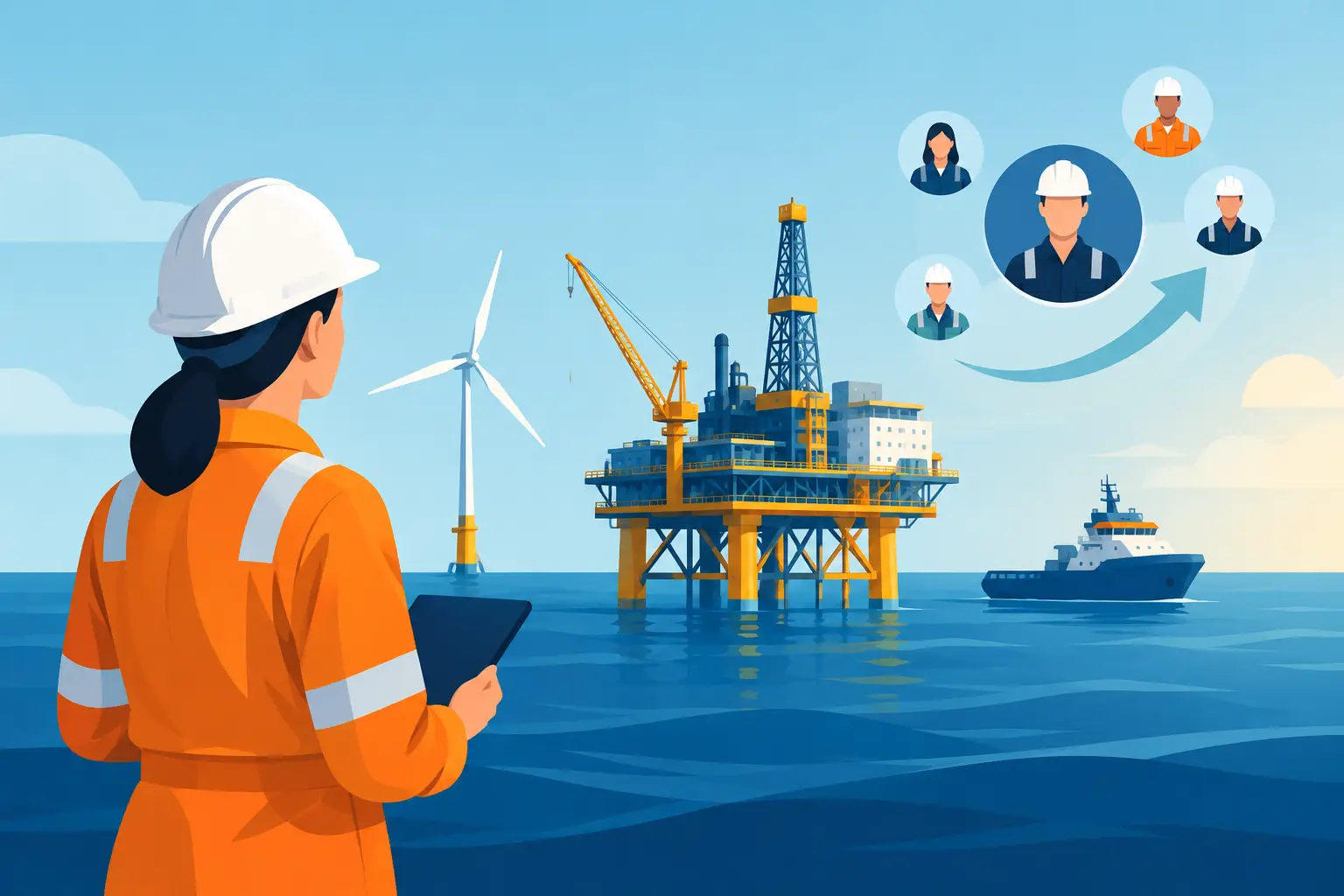
The offshore energy hiring forecast for 2026 is encouraging for people who are prepared to meet the industry’s standards, but it is not a blanket promise that every applicant will get hired quickly. Offshore operators, vessel owners, drilling contractors, wind developers, and service companies need people who can work safely, follow procedures, and arrive ready for a demanding rotational environment. That creates real openings for newcomers, especially those with practical experience from construction, mechanical work, logistics, maritime, industrial maintenance, and the military.
The opportunity is real. So is the competition. Employers are not simply hiring bodies for offshore jobs. They are hiring people they can trust in a safety-critical workplace where poor decisions can affect an entire crew.
Offshore Energy Hiring Forecast: What Is Driving Demand?
Offshore hiring tends to follow project activity, maintenance cycles, vessel schedules, commodity prices, contract awards, and regional regulations. That means the market will never move in a perfectly straight line. One contractor may be expanding a crew while another pauses hiring after a project ends.
Still, several forces are supporting demand across the broader offshore energy market in 2026.
Oil and gas operations continue to need crews for production, drilling support, inspections, shutdowns, maintenance, marine logistics, and equipment services. Existing offshore assets do not run without people. Even when new drilling activity slows in a particular region, operating platforms and support vessels still require qualified workers to keep production safe and reliable.
Offshore wind is also creating a different kind of workforce demand. The pace varies by project financing, permitting, supply-chain capacity, and local policy, so it is not wise to treat offshore wind as an easy or instant hiring market. But its long-term workforce needs extend beyond turbine technicians. Marine crews, cable installation teams, lifting specialists, survey personnel, electricians, mechanics, deck crews, and port-based support workers all play a role.
At the same time, a large part of the offshore workforce is experienced and aging out of physically demanding roles. Companies need capable replacements. For entry-level candidates, that does not mean experience no longer matters. It means employers may be more willing to consider transferable skills when the applicant has the right certifications, documents, attitude, and availability.
Where New Candidates Can Find the Best Openings
Many job seekers make the mistake of searching only for “offshore worker” or “oil rig job.” Those searches are too broad and often lead to outdated listings, scams, or roles that do not match your background.
A stronger approach is to look at the work that keeps offshore operations moving. Entry routes often exist through roustabout and deck positions, catering and housekeeping, warehouse and logistics support, marine crewing, painting and blasting, mechanical assistance, rigging, inspection support, and field service work. The exact job titles differ by company and country, so candidates need to search by function as well as by industry.
Workers with adjacent experience may have an advantage. A construction laborer who understands work permits and physical job sites, a truck driver with safety awareness, a mechanic who can document maintenance, or a warehouse worker who has handled lifting plans and inventory controls can all build a credible case for offshore work. The key is translating that experience into the language an employer uses.
For example, “worked construction” is weak on a CV. “Supported daily site operations, followed toolbox talks, used PPE correctly, completed manual handling tasks, and worked safely around lifting equipment” gives a recruiter something concrete to evaluate.
Geography matters too. US Gulf of Mexico roles, North Sea opportunities, West African projects, Middle East marine operations, and offshore wind supply chains do not all have the same entry requirements. Some companies hire locally because of immigration rules, client contracts, or transportation logistics. Others recruit internationally for experienced technical roles. Before spending money on training, identify the regions and employers where you are legally able to work.
What Employers Will Screen for First
The offshore energy hiring forecast means little if your application fails the first screening stage. In most cases, employers are looking for evidence that you are job-ready before they invest time in an interview.
Your offshore CV needs to be clear, factual, and built around relevant skills. It should show your work history, safety experience, technical abilities, physical readiness where appropriate, certifications, passport or work authorization status, and availability for rotational work. Recruiters may review a large number of applications for one opening. If they cannot quickly see why you match the role, they move on.
Certifications are another major filter, but there is no single certificate that guarantees an offshore job. Requirements depend on your target sector, country, employer, and role. Offshore oil and gas candidates may need basic offshore safety and emergency response training accepted by the employer. Maritime roles can require seafarer documents, medical fitness, and vessel-specific credentials. Offshore wind roles commonly involve different safety standards and technical training.
Do not collect random certificates because someone online said they are required. That can waste money and still leave you unqualified for the jobs you actually want. Start with the roles and companies you are targeting, then confirm the certifications they list most often.
Medical fitness also matters. Offshore work can involve helicopter transfers, ladder climbing, confined work areas, long shifts, weather exposure, and emergency procedures. A candidate who is honest about their physical capacity and willing to meet medical requirements is more valuable than someone who exaggerates their readiness.
Finally, employers assess reliability. Can you travel when required? Can you work a two-week, three-week, or longer rotation? Do you communicate professionally? Do you understand that offshore work is not a vacation with a high paycheck? These questions are often answered by the quality of your CV, application, and interview preparation before you ever step onto a rig or vessel.
How to Position Yourself for Offshore Hiring in 2026
The best time to prepare is before the job posting appears. Hiring can move fast when a crew change, mobilization, shutdown, or new contract creates an immediate need. Candidates who already have their documents organized can apply while others are still trying to figure out what a recruiter means by “offshore-ready.”
Start by choosing a realistic entry path. If you have no offshore experience, you may need to begin with a support role, a local contractor, or an onshore position that connects to offshore operations. That is not settling. It is a practical way to gain relevant experience, references, and a record of safe work.
Next, build your application materials around proof. Show safety meetings attended, equipment used, permits followed, shifts worked, teams supported, and problems solved. Use dates, job titles, and measurable responsibilities. Keep the format simple enough for both recruiters and application systems to read.
Then create a focused company list. Offshore work is fragmented across operators, drilling companies, marine contractors, service providers, staffing firms, fabrication yards, ports, and maintenance contractors. A job seeker who applies to 10 well-matched employers with a tailored CV will often outperform someone who sends the same generic application to 100 listings.
Track every application. Record the company, role, location, required documents, date applied, contact name, and follow-up date. This sounds basic, but organized candidates make fewer mistakes and can spot patterns in their search. If you receive no responses after 30 applications, the answer is usually not to send 30 more identical applications. Review your CV, target roles, certifications, and application quality.
RouteK’s approach is built around this kind of preparation: turning a confusing offshore job search into a sequence of clear actions, from employer research and certification planning to CV improvement and application strategy.
The Trade-Offs Behind Higher Offshore Pay
Offshore work can offer stronger earnings than many land-based jobs, particularly when overtime, allowances, specialist skills, and rotational schedules are involved. But higher pay is tied to higher expectations. You may spend weeks away from home, share close quarters with coworkers, work nights, miss holidays, and follow rules that leave little room for shortcuts.
Some people thrive in that structure. They value concentrated work periods followed by time off, steady skill development, and the ability to increase their income faster than in their previous field. Others find the isolation or unpredictability difficult. Be honest about the lifestyle before making a major investment.
The hiring market also rewards patience. A first offshore role may not be your dream position or your highest-paying option. It may be the job that proves you can work safely, complete a rotation, and earn a reference from an offshore supervisor. That experience can open better opportunities later.
Make Yourself Easy to Hire
The strongest takeaway from the 2026 forecast is simple: demand creates opportunity, but preparation converts opportunity into a job offer. Companies will continue to need people who can support offshore operations, especially those who bring practical skills, a safety-first mindset, and professional application materials.
Do not wait for a perfect listing before getting ready. Pick a target role, identify the employers that hire for it, verify the requirements, and make your CV show that you are ready to contribute from day one. Your next offshore job may start with a better application, not a better guess.
Leave a Reply