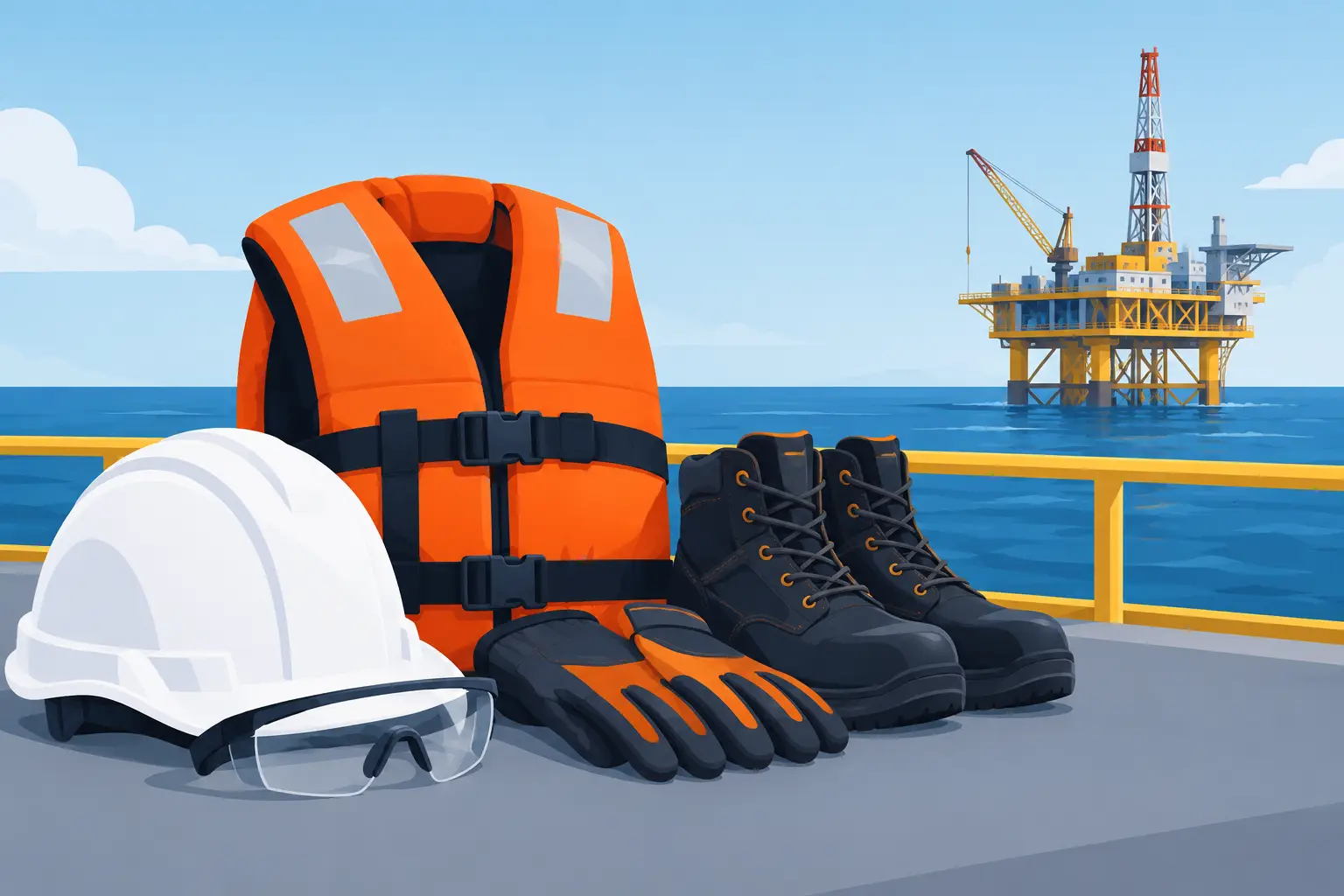
The first time you step onto an offshore installation, your PPE is not a box to tick for the hiring team. It is part of the operating system that keeps people safe around heavy lifts, pressurized systems, rotating equipment, chemicals, sea exposure, and changing weather. Understanding essential offshore personal protective equipment helps new candidates show employers that they respect the standard before they ever mobilize.
For people changing careers, PPE can feel like another confusing part of getting offshore. You may see different gear requirements in job ads, training videos, and advice from workers in different regions. The practical truth is that your employer, worksite, task, and country regulations determine the exact equipment. Your job is to understand the core categories, arrive prepared, and never guess when a supervisor or safety procedure provides direction.
Essential Offshore Personal Protective Equipment Starts With the Task
Offshore work is not one job. A roustabout working around pipe handling faces different hazards than a mechanic opening machinery guards, a scaffold crew working at height, or a catering worker moving through active deck areas. That is why competent employers use task-based risk assessments rather than handing every worker the same kit and calling it done.
PPE is the final layer of protection, not the first. Employers should control hazards through equipment design, barriers, procedures, permits, isolation, and training before relying on what a worker wears. But when a hazard cannot be eliminated, the right PPE gives you a critical layer of protection. Wearing it correctly, maintaining it, and speaking up when it is damaged are all part of being offshore-ready.
For an entry-level candidate, this matters in interviews too. Hiring managers do not expect you to recite every site rule. They do expect you to understand that safety is active work: following procedures, using issued gear, checking fit, and stopping to ask when conditions change.
The Core PPE You Will See Offshore
Head, eye, and hearing protection
A hard hat is standard on many offshore decks, workshops, and industrial areas. It protects against falling objects, bumps, and some electrical risks when the correct rated helmet is used. The chin strap may be mandatory in windy conditions, when working at height, or in designated areas. A loose hard hat is not protective equipment. It is an object waiting to fall.
Safety glasses with side protection are common baseline equipment. Depending on the task, workers may need chemical splash goggles or a face shield as well. A face shield is usually additional protection, not a replacement for safety glasses. Grinding, cutting, pressurized cleaning, and chemical handling all create different eye and face hazards, so use the protection specified for the job.
Noise is a constant issue around generators, pumps, engines, drilling equipment, and machinery. Earplugs or earmuffs may be required in posted zones. The trade-off is communication: hearing protection must reduce harmful noise without causing workers to miss alarms, radio calls, or instructions. Use the type approved by the site and make sure you know how it fits.
Protective clothing and footwear
Flame-resistant clothing, often called FR or FRC, is a major part of offshore safety where fire or flash hazards exist. It is designed to resist ignition and limit injury rather than melt onto skin like some synthetic materials can. Requirements vary by company and role. Some employers issue coveralls, while others specify acceptable garments workers must bring. Do not assume any work coverall is flame-resistant just because it looks industrial.
Offshore safety boots generally need protective toe caps, slip-resistant soles, and ankle support. They must fit well enough for long shifts, ladders, grating, and wet surfaces. Boots that are too loose create blisters and poor footing. Boots that are too tight can become a serious problem after a 12-hour shift. Break in approved boots before travel if you are responsible for supplying them, but do not alter them in a way that compromises their protection.
Gloves are equally task-specific. General handling gloves can protect against abrasion and pinch points, while cut-resistant, chemical-resistant, heat-resistant, impact-resistant, or electrically rated gloves are used for particular hazards. The wrong glove can be dangerous. For example, bulky gloves may reduce dexterity around fine work, and gloves should not be used near certain rotating equipment if they increase entanglement risk. Follow the task instruction, not personal preference.
Fall protection and flotation equipment
Working above open water, on ladders, on elevated platforms, or near unprotected edges can require fall protection. A full-body harness is only one part of a fall-arrest system. The lanyard, connection point, anchor, inspection process, rescue plan, and worker training matter just as much.
Never treat a harness as ordinary clothing. Workers must inspect it before use for cuts, burns, damaged stitching, corrosion, altered labels, or other defects. A harness involved in a fall may need to be removed from service even when damage is not obvious. More importantly, a fall-arrest system is not complete without a rescue plan. Suspension after a fall can quickly become a medical emergency.
Personal flotation devices may be required when working near water, transferring by vessel, or boarding offshore facilities. The exact device depends on the operation and local rules. Offshore personnel also complete survival training that covers emergency response and escape procedures. PPE supports that training, but it never replaces it.
Respiratory and chemical protection
Respiratory protection is one of the areas where guesswork can cause real harm. Dust masks, half-face respirators, full-face respirators, and supplied-air systems protect against very different contaminants and oxygen conditions. A respirator is only effective when the cartridge is correct, the mask seals properly, and the wearer has completed the required fit testing and training.
Facial hair can interfere with the seal on tight-fitting respirators. This is why some offshore employers have strict shaving policies for personnel in roles that may require respiratory protection. It is not about appearance. It is about whether emergency equipment can protect you when it is needed.
Chemical gloves, splash goggles, aprons, and suits may also be required for handling fuels, cleaning products, drilling fluids, solvents, or other substances. Safety data and site procedures identify the correct protection. One material can pass through a glove that works perfectly well against another, so “chemical-resistant” is not a universal answer.
What New Offshore Candidates Should Buy, Bring, or Leave Alone
One of the most common mistakes is spending money on expensive gear before receiving an offer. Many offshore companies issue required PPE because they must control quality, certification, sizing, inspection, and replacement. Turning up with your own unapproved hard hat, harness, or FR clothing can create more problems than it solves.
Read the employer’s mobilization instructions carefully. If the company asks you to bring specific items, buy exactly to that specification and keep receipts. Ask the recruiter or operations contact if the instructions are unclear. Questions about safety requirements show professionalism. Guessing does not.
You may still benefit from practical personal items that are permitted, such as comfortable base layers, properly fitting socks, prescription safety eyewear arrangements, or an approved small flashlight. But personal comfort must never override site rules. Loose jewelry, damaged boots, non-approved hoodies under FR clothing, and personal gloves used for the wrong job are all avoidable issues.
PPE Readiness Can Strengthen Your Job Application
Employers hiring for offshore roles are looking for workers who can be trained, trusted, and relied on in a safety-critical environment. Even with no previous offshore experience, you can demonstrate the right mindset on your CV and in interviews.
If you have worked in construction, warehousing, mechanical maintenance, maritime operations, manufacturing, or logistics, describe relevant safety habits clearly. Mention toolbox talks, hazard reporting, permit-to-work environments, equipment inspections, manual handling, lockout procedures, or use of PPE only when you have genuinely done them. Specific, honest examples carry more weight than broad claims such as “safety focused.”
You should also understand that certifications and PPE are connected but not interchangeable. Offshore survival training, medical clearance, lifting credentials, confined-space training, and trade qualifications may help you qualify for particular roles. None of them remove the need to follow the PPE rules on the installation. RouteK helps candidates organize these requirements so they can focus on the credentials and application steps that match their target roles.
Build the Habit Before You Mobilize
The workers employers want offshore are not the ones who claim to know everything. They are the ones who inspect their gear, listen during the pre-job briefing, recognize when conditions have changed, and ask before taking a risk.
Treat essential offshore personal protective equipment as proof of a larger professional standard. Get the right training, follow your future employer’s mobilization instructions, and bring a safety-first attitude to every application and every shift. That approach will help you earn trust long before your first rotation is over.
Leave a Reply