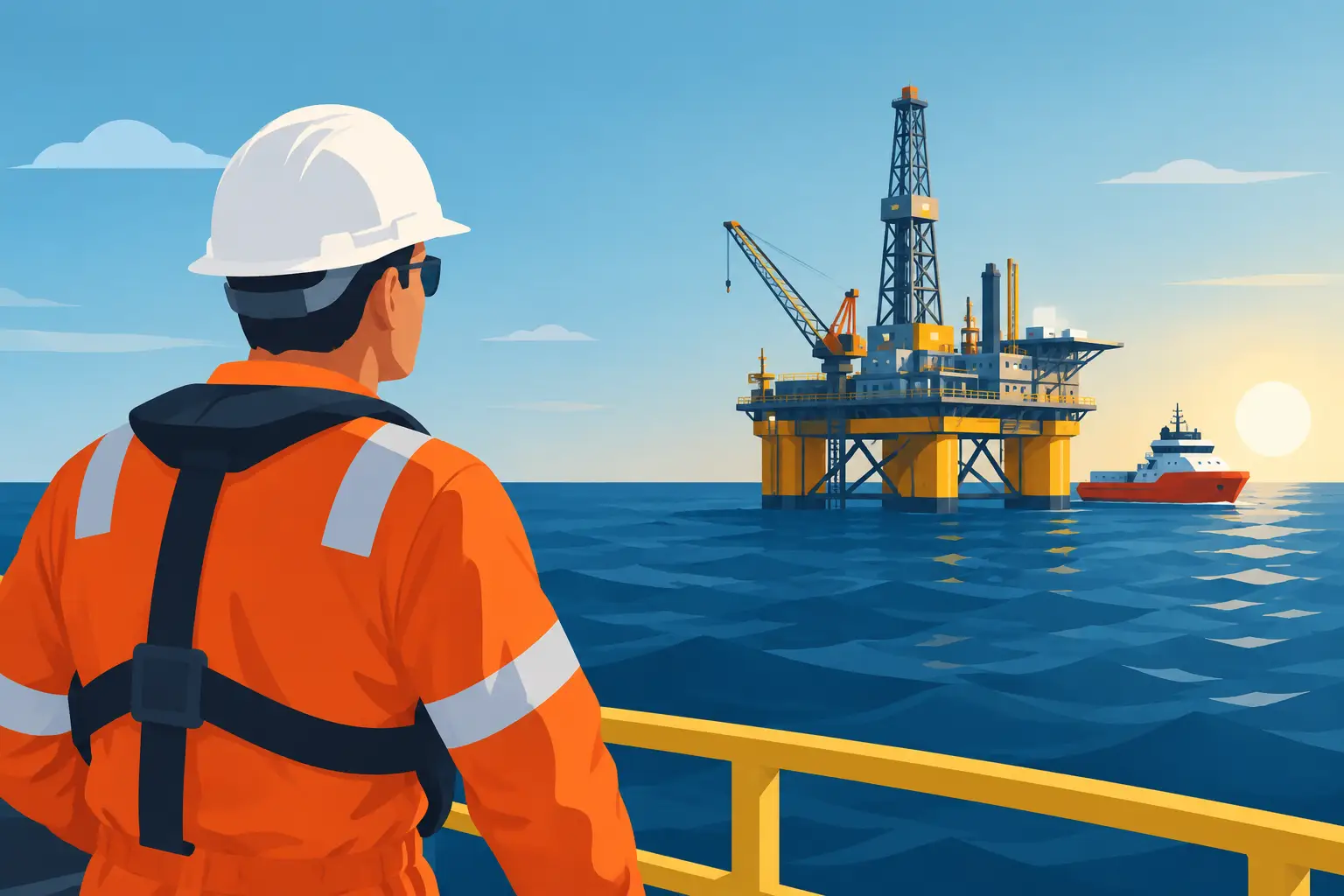
A helicopter ride over open water, long shifts around heavy equipment, and a workplace far from shore can make offshore work sound more dangerous than it is – or less dangerous than it can be. The honest answer to is offshore work dangerous is yes: offshore jobs carry real risks. But they are not unmanaged risks, and the industry is built around reducing them through training, procedures, equipment, supervision, and a workforce expected to speak up.
For people considering offshore work because they want better income, a rotational schedule, or a serious career change, that distinction matters. This is not a job to enter casually. It is also not a career you should rule out based on outdated stories or fear alone.
Is Offshore Work Dangerous? Yes, but Risk Is Controlled
Offshore sites can include oil and gas platforms, drilling rigs, wind farms, vessels, construction projects, and marine support operations. Conditions vary, but the common challenge is that people are working in a remote, industrial environment where a small mistake can become serious quickly.
You may be exposed to moving machinery, suspended loads, pressurized systems, electrical equipment, chemicals, confined spaces, slippery decks, rough weather, and long periods away from home. Travel to and from the installation can also involve helicopters or crew boats. None of that should be minimized.
At the same time, reputable offshore employers do not treat safety as a poster on a wall. They use permit-to-work systems, toolbox talks, emergency drills, personal protective equipment, supervision, maintenance programs, incident reporting, and stop-work authority. Your job is not to be fearless. Your job is to follow the system, stay alert, and refuse to take shortcuts.
In many ways, offshore work is safer than people expect because hazards are visible, planned for, and constantly discussed. The risk rises when standards are ignored, communication breaks down, someone works while exhausted, or a worker feels pressure to prove themselves by rushing.
What Makes Offshore Work Higher Risk?
The offshore environment combines several risk factors in one place. Understanding them helps you decide whether the work suits you and shows you what employers expect from new hires.
Heavy industrial work
A large portion of offshore risk comes from routine industrial tasks. Lifting operations, crane activity, pipe handling, welding, maintenance, mechanical repairs, and deck work all require attention. A hand placed in the wrong area, a poorly secured load, or a missed instruction can lead to injury.
This is why employers care about practical awareness even for entry-level roles. They want people who watch their surroundings, understand exclusion zones, use the right PPE, and ask when they are unsure. Offshore is not a place for guessing.
Weather and the marine environment
Wind, rain, waves, saltwater, heat, cold, and poor visibility can change the job quickly. Wet surfaces increase slip hazards. High winds can halt lifting operations. Sea conditions can affect transfers, vessel work, and fatigue.
You cannot control the weather, but offshore operations are designed around it. Work can be paused when conditions move outside safe limits. That may feel frustrating when a schedule is tight, but stopping work is often the correct professional decision.
Distance from shore
Offshore workers are not minutes away from a normal emergency room. Medical teams, rescue equipment, evacuation plans, and communication systems are therefore part of the operating model. Personnel complete safety inductions and emergency response training because everyone needs to know what to do if there is a fire, gas release, man-overboard event, or medical emergency.
Remote work also means you must take personal fitness seriously. If you have a medical condition, disclose it honestly during the required medical process. Hiding information to get hired is not a smart career move. It can put you, your crew, and your future employment at risk.
Fatigue and mental pressure
Offshore shifts can be demanding. Many rotations involve 12-hour days for weeks at a time, commonly followed by an extended period at home. The schedule works well for people who value concentrated earning periods and time off, but it is not easy for everyone.
Fatigue can affect judgment, reaction time, and communication. Being away from family can affect mood and focus. Strong employers manage working hours and rest requirements, but workers also need the discipline to sleep properly, hydrate, report fatigue, and avoid treating exhaustion like a badge of honor.
Safety Is Part of the Job, Not an Extra Requirement
Newcomers sometimes assume that safety training is simply a box to check before applying. That mindset will hurt your chances. Offshore employers hire people who understand that safety performance is part of performance.
Before mobilizing, workers may need offshore survival training, water survival instruction, helicopter safety awareness, sea survival, first aid, medical clearance, or role-specific credentials. The exact requirements depend on the country, employer, position, and type of facility. A deck role, a drilling role, an electrical position, and an offshore wind job can each have different certification paths.
The goal is not to collect every certificate you find online. It is to identify the certifications recognized by the employers and region you are targeting. Paying for random courses without a job-search plan can waste money and delay your entry into the industry.
Once offshore, safety continues through daily routines. You may attend pre-job briefings, review hazards, inspect equipment, wear designated PPE, follow procedures, and take part in drills. If a task changes, the risk assessment may need to change too. Experienced workers respect these processes because they have seen how quickly routine work can turn unsafe.
The Right Attitude Reduces Your Risk and Improves Hiring Chances
Offshore work is not usually a good fit for someone who hates rules, resents supervision, or believes experience makes procedures unnecessary. Employers are looking for workers who can be reliable members of a crew.
That means arriving prepared, listening carefully, communicating clearly, and admitting what you do not know. It means stopping when something looks wrong instead of assuming another person will handle it. It also means understanding your limits. Confidence offshore comes from competence and preparation, not from acting tough.
For candidates with construction, logistics, mechanical, maritime, warehouse, manufacturing, or trade experience, many of these habits transfer directly. You may already understand lockout procedures, lifting safety, job hazard analysis, shift handovers, and the importance of maintaining equipment. Your challenge is to translate that experience into an offshore-ready CV and application.
If you have no industry experience, you can still build a credible path. Focus on recognized training, physical readiness, a clear CV, and a targeted application strategy. RouteK helps candidates organize those steps so they can pursue offshore opportunities with a plan instead of sending unfocused applications into a crowded market.
How to Decide Whether Offshore Work Is Right for You
The better question is not only whether offshore work is dangerous. Ask whether you are prepared for its demands and whether the rewards match your goals.
It can be a strong option if you want higher earning potential, are comfortable with rotational living, can work in structured teams, and take safety seriously. It may be a poor fit if you need a predictable daily home routine, struggle with isolation, cannot meet medical or physical requirements, or dislike industrial environments.
Before you apply, research the role itself. Find out where the work takes place, what the rotation looks like, what training is required, whether travel is covered, and what a typical shift involves. Be cautious of recruiters who promise fast offshore placement without discussing certifications, medicals, safety requirements, or employer details. Legitimate hiring is specific.
You should also prepare for the reality that entry can take time. The best candidates do not simply wait for a job post. They build the required documents, target companies that match their location and background, and apply with a CV that shows they understand safety-critical work.
Offshore Work Rewards Preparation
Offshore work has genuine hazards, and anyone telling you otherwise is not giving you the full picture. Yet danger is not the same as constant danger. Professional offshore operations rely on systems designed to prevent incidents, while workers are expected to use those systems every day.
If the career appeals to you, do not let uncertainty make the decision for you. Learn what the role requires, get the right preparation, and approach every application with the mindset employers trust most: capable, alert, and ready to work safely.
Leave a Reply