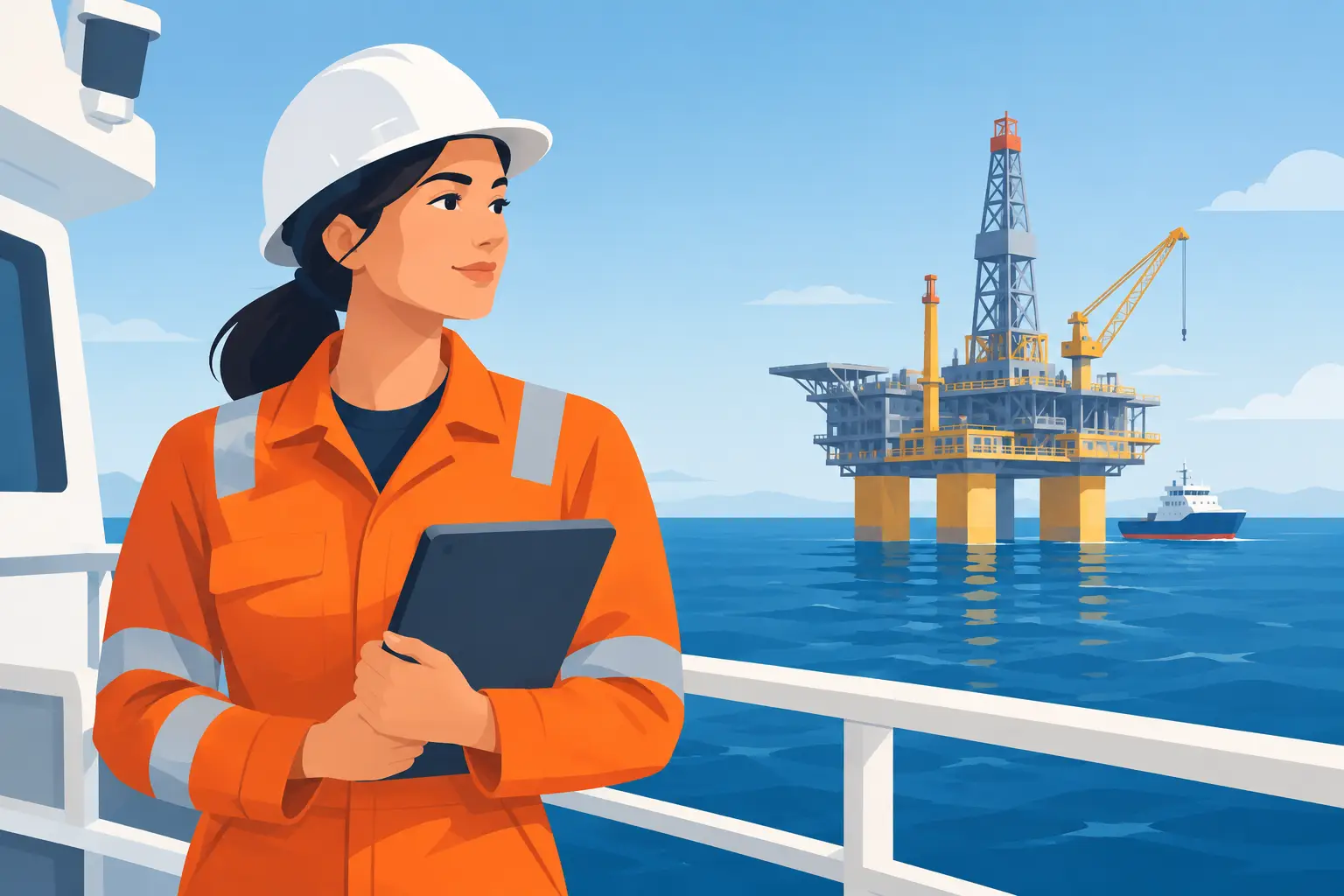
A woman stepping onto an offshore platform is not a novelty to the operators, drillers, wind technicians, vessel crews, and service companies already hiring women across the industry. The real question behind “can women work offshore” is usually more practical: Can I meet the requirements, get hired without the right connections, and handle the work and rotation? For qualified, prepared candidates, the answer is yes.
Offshore work is demanding, safety-critical, and competitive for everyone. It can also provide higher earning potential, structured time off, valuable technical experience, and a clear career path for people willing to train and apply strategically. Gender is not the deciding factor. Your safety record, fitness for duty, certifications, work ethic, communication, and ability to perform the role are what employers assess.
Can Women Work Offshore in the United States?
Yes. Women work offshore in oil and gas, offshore wind, marine operations, drilling, maintenance, catering, logistics, inspection, engineering, and safety roles. Some jobs are based on fixed platforms or drilling rigs, while others are on vessels, floating production units, wind farms, or shore bases supporting offshore crews.
Federal equal-employment rules apply to many US offshore employers, and major operators and contractors increasingly recruit from a wider talent pool. That does not mean every workplace is identical or that every company has the same culture. Offshore remains male-dominated in many departments, particularly on the hands-on operations side. Still, being one of fewer women on a crew is very different from being unable to build a career there.
The standard is simple: if you can safely do the work, meet the medical and training requirements, and work professionally within a close-knit crew, you can compete for offshore jobs.
The Offshore Roles Women Can Pursue
Your best entry point depends more on your existing skills than on your gender. A construction worker, mechanic, military veteran, warehouse lead, marine worker, cook, nurse, electrician, or administrative professional may each have a different route offshore.
Entry-level and transition-friendly opportunities can include galley hand, steward, laundry attendant, housekeeper, roustabout, deckhand, material handler, rigger trainee, logistics support, and offshore medic roles. These positions vary by company, location, and project. Some require prior maritime or industrial experience, while others train people who show reliability, safety awareness, and a willingness to work rotational schedules.
Candidates with trade experience may target mechanic, electrician, instrumentation technician, welder, pipefitter, crane operator, scaffolder, nondestructive testing technician, or maintenance roles. Offshore wind also creates opportunities for wind turbine technicians, vessel crew, marine coordinators, cable technicians, and project support staff.
Professional and specialist routes include HSE advisor, environmental technician, geologist, engineer, project coordinator, radio operator, procurement support, and catering management. These roles often require formal qualifications or documented industry experience, but they are not limited to people who started their careers offshore.
The key is not to apply blindly to every role labeled offshore. Match your real skills to a job title, identify the certifications that employer expects, and present your experience in language the hiring manager recognizes.
What Offshore Employers Actually Look For
Offshore employers hire people who reduce risk, support production, and work well in a team. That applies whether you are applying for a first job or moving into a better-paid position.
A strong candidate can show a track record of following procedures, using tools correctly, communicating during shift handovers, working long days, and responding calmly when conditions change. Construction, manufacturing, warehousing, trucking, maritime work, hospitality, emergency services, and the military can all provide transferable evidence.
Your application should make those strengths obvious. A general resume that says you are “hardworking” will not compete well. An offshore-ready CV shows your certifications, safety training, physical work experience, equipment familiarity, shift patterns, relevant achievements, and availability. It tells the employer what you can do on day one.
For many roles, you may also need a pre-employment medical assessment, drug and alcohol screening, background checks, a valid passport, and the legal right to work in the hiring location. Requirements can differ sharply between the Gulf of Mexico, international oil and gas projects, offshore wind sites, and marine vessels.
Certifications: Get the Right Ones, Not Every One
Certification confusion holds many newcomers back. Some people spend thousands of dollars on courses before they have chosen a target role or researched the companies they want to work for. Others wait too long and lose opportunities because they have none of the basic training required.
The right approach is targeted preparation. Common requirements may include Basic Offshore Safety Induction and Emergency Training, helicopter escape training, first aid, fire awareness, HUET, sea survival, TWIC credentials for applicable US maritime access, and role-specific trade qualifications. Offshore wind employers may request Global Wind Organisation training, while vessel-based work can require maritime credentials such as a Transportation Worker Identification Credential or Merchant Mariner Credential depending on the role.
Do not assume one certificate works everywhere. A safety course accepted by an international operator may not be the first requirement for a Gulf-based contractor, and a wind technician pathway is different from a drilling support pathway. Check job postings and employer requirements before spending money.
If you are new, build a realistic sequence: choose a job target, identify the baseline requirements, strengthen your CV, then apply consistently to companies that hire for that route. RouteK helps candidates organize that process instead of relying on scattered advice and repeated guesswork.
The Reality of Offshore Rotations for Women
Offshore work can pay well because the environment is remote, schedules are intense, and every role carries responsibility. Rotations may be two weeks on and two weeks off, three weeks on and three weeks off, or another schedule based on the project and country. During your hitch, expect early starts, 12-hour shifts, shared spaces, strict safety procedures, and limited privacy.
For some women, the rotation is a major advantage. Concentrated work periods can create substantial time at home, reduce daily commuting, and help people save aggressively toward a house, business, education, or family goals. For others, time away from children, partners, or caregiving responsibilities is the hardest part. There is no universal answer. You need to assess your support system and your reasons for pursuing the career.
Physical demands are also role-specific. A catering position, HSE role, technician job, deck role, and drilling-floor assignment do not require the same strength or daily tasks. Employers use job-specific medical and fitness standards. You do not need to look like the strongest person on the crew, but you must be able to perform essential duties safely and consistently.
Workplace culture matters, too. Well-run crews operate on professionalism, not intimidation. If inappropriate behavior occurs, use company reporting processes and document facts. Before accepting a position, ask clear questions about accommodations, travel arrangements, rotation, supervisor structure, PPE sizing, and site policies. Serious employers should be able to answer them directly.
How to Make Your Application Competitive
The biggest mistake is assuming that being interested in offshore work is enough to get hired. Employers receive applications from experienced workers, so newcomers need to show preparation.
Start by selecting one or two realistic job paths based on your background. Then create a CV tailored to those roles, not a generic document sent everywhere. Put safety credentials and relevant equipment, trade, hospitality, maritime, or shift-work experience where recruiters can find them quickly.
Apply directly to operators, drilling contractors, service companies, vessel operators, staffing firms, and offshore wind contractors. Track every application, follow up professionally when appropriate, and keep your documents current. If a job requires a certification you do not yet have, do not automatically rule yourself out. Compare the full posting against your experience and determine whether the employer lists it as mandatory or preferred.
Prepare for interviews by practicing practical answers. Be ready to explain how you work safely, handle fatigue, take direction, resolve conflict, and contribute during long rotations. Confidence matters, but evidence matters more. Specific examples from past jobs will beat vague claims every time.
Offshore employers need capable people who can show up prepared, respect the crew, and do the job safely. If offshore work fits your goals, do not let outdated assumptions make the decision for you. Build the qualifications, position your experience properly, and give yourself a real chance to earn your place on the crew.
Leave a Reply