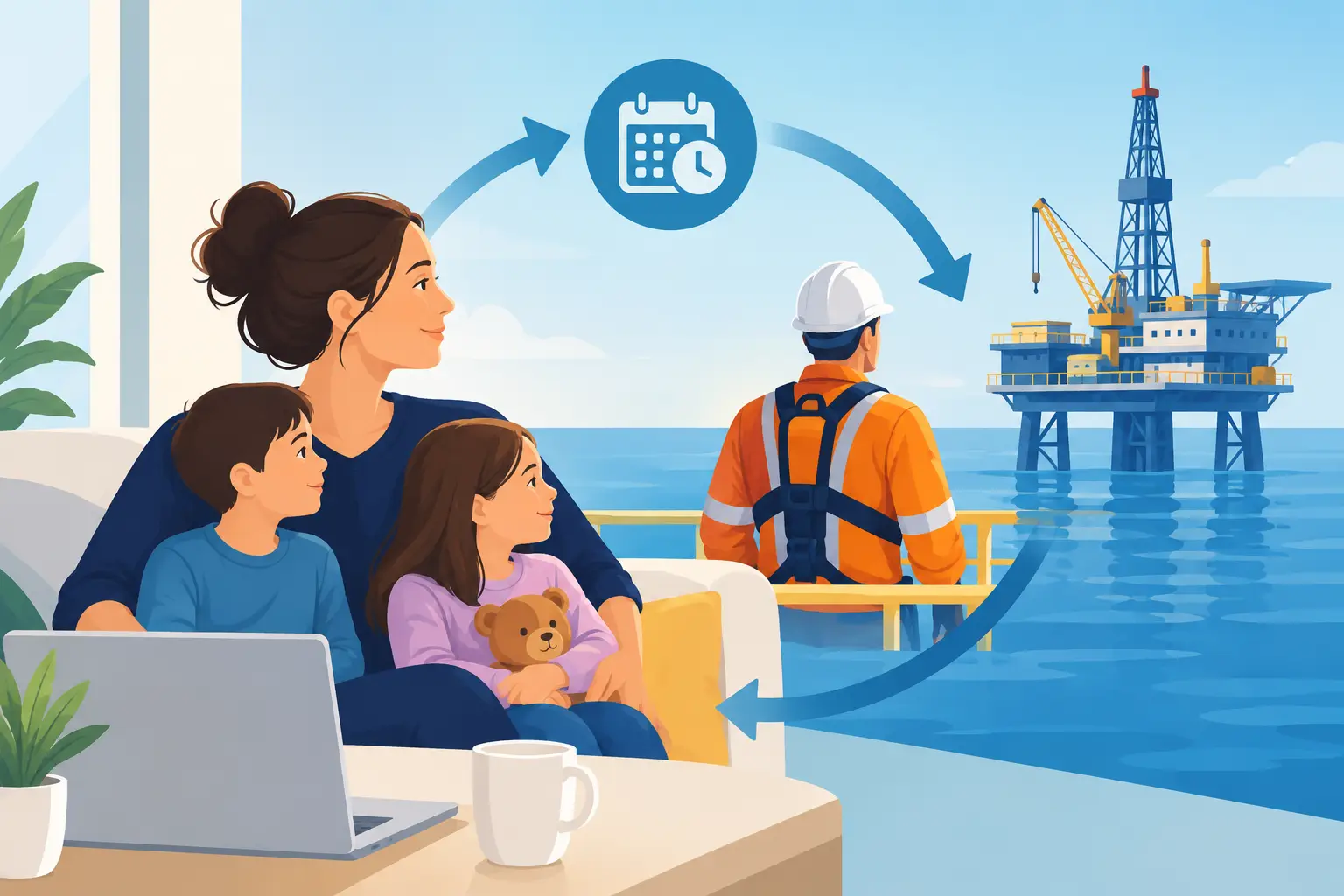
A two-week-on, two-week-off rotation can give a parent something many land-based jobs do not: protected time at home. But offshore work also means missing school drop-offs, birthdays, and ordinary evenings during your hitch. The best offshore jobs for parents are not simply the highest-paying roles. They are roles with predictable rotations, realistic entry requirements, and enough earning potential to make time away count.
For some families, offshore work is a major upgrade from unpredictable construction callouts, long-haul driving, or overtime-heavy plant work. For others, the absence is a deal-breaker. The right choice depends on your household support, your partner’s schedule, your children’s ages, and whether you can handle a safety-critical job where showing up rested and focused is non-negotiable.
What makes an offshore job parent-friendly?
No offshore position is easy on family life. Most roles involve long shifts, shared accommodations, limited privacy, and restricted communication while you are on the facility or vessel. A parent-friendly offshore job is one where the schedule is clear before you accept, the employer has a stable crew-change system, and your time off is genuinely yours.
Look beyond the advertised day rate or annual salary. Ask whether the rotation is fixed or subject to change, whether travel days are paid, how often the company extends hitches, and whether workers are called back early. A nominal 14/14 schedule loses its value if you routinely spend unpaid days in transit or are kept offshore for an extra week.
Parents entering the industry should also focus on roles that build a career path. A first offshore job may be physically demanding, but it should give you safety exposure, documented experience, and a route toward better-paying positions. That is how rotational work becomes a long-term plan rather than a short-term sacrifice.
8 best offshore jobs for parents
1. Offshore catering assistant or galley hand
Catering crews keep offshore installations running. Entry-level positions can include galley hand, kitchen assistant, steward, pot washer, or laundry assistant. The work is active and repetitive, but it is one of the more accessible routes for candidates without drilling or trade experience.
For parents, catering can offer established rotations and a defined department structure. Experience in restaurants, hospitality, cleaning, food service, or institutional kitchens helps. Food safety credentials, a strong work ethic, and the ability to work cleanly under pressure matter just as much as formal culinary training for junior roles.
The trade-off is that entry-level catering pay may be lower than skilled mechanical or electrical work. It can still be a valuable first step if it gets you offshore, builds your network, and creates a record of reliable performance.
2. Offshore cook or chef
Experienced cooks and chefs can earn more than catering assistants while working within similar rotational systems. Offshore cooking is not just restaurant work at sea. You are preparing high-volume meals, managing stock, following strict hygiene rules, and feeding crews working around the clock.
This role suits parents with proven kitchen experience who want concentrated work periods followed by real blocks of time at home. Employers often want commercial kitchen experience, food-handling certification, and evidence that you can work independently. Strong menu planning and dietary awareness can set you apart.
3. Rigger or deck crew member
Rigging work involves moving, securing, and handling loads safely. Depending on the operation, job titles may include rigger, deckhand, banksman, slinger, or lifting operations support. It is hands-on work with clear safety procedures, and it can be a good fit for people from construction, warehousing, logistics, maritime, or industrial labor.
Parents may value the clear separation between work and home: when your hitch ends, you are not taking job-site calls every evening. But this is physical work, often outdoors in demanding weather. You will need the right lifting and rigging competencies, medical clearance, offshore survival training, and a CV that shows safety awareness rather than just general labor experience.
4. Roustabout or floorhand
Roustabout and floorhand jobs are classic entry routes on drilling rigs. Roustabouts handle general deck work, cleaning, maintenance support, cargo tasks, and equipment organization. Floorhands work closer to drilling operations and may progress into more specialized rig positions.
These roles can offer strong earning potential compared with many entry-level land jobs, especially when rotational pay and overtime structures apply. They are also competitive. Employers want candidates who understand the reality: long shifts, heavy manual work, strict rules, and zero tolerance for casual attitudes toward safety.
For a parent with construction, farming, mechanical, or laboring experience, this can be a serious career move. It is not usually the easiest schedule emotionally, though. Make sure your family is prepared for the intensity of the first few hitches before committing.
5. Offshore mechanical technician
Mechanical technicians maintain pumps, engines, compressors, hydraulic systems, and other critical equipment. This is one of the strongest offshore career tracks for parents who already have mechanical maintenance experience, trade school training, or industrial repair skills.
The barriers to entry are higher than in catering or general deck work, but the upside is significant. Skilled technicians are valued because downtime costs operators money and equipment failures can create serious hazards. A documented work history, trade credentials, maintenance-system knowledge, and relevant offshore certifications can move you ahead of applicants who only list general mechanical skills.
A predictable rotation in a skilled technical role can provide both higher earnings and a clearer long-term career ladder. It depends heavily on the contractor, vessel type, and region, so verify the actual schedule before accepting an offer.
6. Offshore electrician or electrical technician
Electrical work offshore includes maintaining motors, control panels, power generation systems, lighting, and hazardous-area equipment. It is a high-responsibility role, best suited to licensed electricians or candidates with strong industrial electrical backgrounds.
For parents, electrical work can be attractive because it is specialized and often better paid than general labor roles. The catch is that offshore employers will expect more than a basic residential electrical background. They may require industrial experience, relevant licensing, CompEx or hazardous-area training in some markets, and a proven understanding of maintenance procedures.
If you are already an electrician, offshore can be a practical route to higher earnings without abandoning your trade. Your application needs to translate your existing experience into the language employers use: preventive maintenance, fault finding, lockout/tagout, permits, and safety systems.
7. Offshore medic
Offshore medics provide first-line medical care, manage health records, support emergency response, and help maintain occupational health standards. Rotations can be attractive, but this is not an entry-level shortcut. Most employers require professional medical qualifications, emergency experience, offshore medical training, and sometimes industry-specific credentials.
For qualified EMTs, paramedics, nurses, or military medics, the role can offer a meaningful balance of income, professional responsibility, and structured time off. Because a medic may be the primary medical professional on site, employers hire carefully. Your clinical background must be current, credible, and tailored to remote work.
8. Remote-operated vehicle technician
ROV technicians operate and maintain underwater robotic systems used for inspection, subsea construction, surveys, and repair work. It is a technical path with opportunities for people from electronics, hydraulics, mechanical maintenance, IT, or marine engineering.
This role can be rewarding for parents who want a specialized career with rotational work, but project schedules may be less predictable than a fixed-platform position. Mobilizations can shift, jobs can be weather-dependent, and travel may be extensive. Still, for candidates willing to build technical competence, ROV work can lead to strong long-term earning potential.
How parents can choose the right offshore path
Start with the skills you already have. A restaurant supervisor should not apply for an electrician role just because it pays more, and a licensed industrial mechanic should not assume they must begin as a roustabout. The fastest route offshore is often the role closest to your proven experience.
Then assess the family side with the same seriousness you bring to a job application. Talk through childcare, emergency contacts, school schedules, finances during training, and how you will stay connected on rotation. Offshore employers need dependable workers. Your family needs a dependable plan.
Finally, prepare for the hiring process before you start sending applications. Offshore recruiters look for medical fitness, relevant safety training, a clean and targeted CV, work authorization where required, and evidence that you understand the job. Random applications to dozens of companies rarely beat a focused strategy. RouteK helps candidates organize those steps, identify employers, and build an offshore-ready application instead of guessing what hiring teams want.
A higher paycheck only works if the rotation works
Offshore work can give parents a way to earn more, reduce the daily commute grind, and create meaningful stretches of time at home. It can also test a family if the job is chosen only for the money. Choose a role that fits your skills, confirm the rotation in writing, and build the qualifications that make employers see you as a safe, reliable hire. The goal is not just to get offshore – it is to build a career your family can plan around.
Leave a Reply